One of the questions I am asked most often is: what is the difference between single-phase and three-phase gel?
The difference between single-phase and three-phase gel
I like to explain it with this comparison: imagine caring for a lovely head of curly hair. Besides a good shampoo, you need a good conditioner and, ideally, a styling product to define the curls as they dry.
Now imagine that single-phase gel is an all-in-one shampoo, conditioner and curl-defining product, while the three-phase system consists of:
- a good-quality shampoo formulated specifically for thorough cleansing;
- a repairing conditioner;
- a styling fluid to shape curls and add shine.
What can we learn from this comparison?
Single-phase gel: what is it and how does it work?
A single-phase gel is formulated to perform all three stages of a nail enhancement with one product:
- create an adhering base;
- extend or overlay the nail;
- seal and add shine.
This means using the same jar of product for every stage of the enhancement.
Three-phase gel: what is it and how does it work?
What does creating an enhancement with a three-phase gel involve?
- I use a dedicated base, formulated specifically for that role;
- I use a builder gel to extend or overlay the nail;
- finally, I seal the work with a dedicated top coat, formulated specifically for sealing.
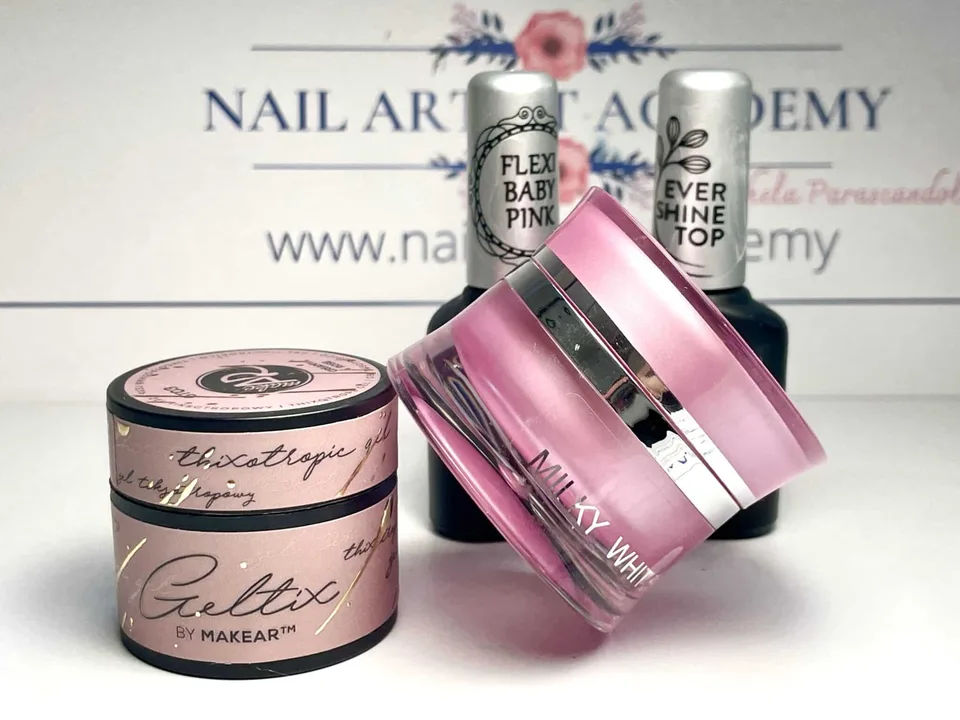
I therefore need 3 different jars of product to complete the service.
Start your training at my academy
The most comprehensive online course platform in the nail world.
You will find courses in both nail sculpting and nail art.
Once you have purchased a course, it will be available on your profile forever.
Single-phase or three-phase gel for nail enhancements?
You might therefore think that a single-phase system is the best and most economical option. But is that really the case?
I do not know if you have ever tried an all-in-one shampoo. I have, and—as with many products trying to do too much at once—I was disappointed.
For nail enhancements, single-phase gel can perform very well as a builder, but show weaknesses as a base and top coat: there may be lifting on more challenging nails. It rarely achieves the shine of a dedicated top coat, and its thickness can make thin, polish-style application difficult.
Now consider a three-phase system consisting of:
- a base formulated 100% for that role, perhaps specifically for challenging nails;
- a builder gel formulated 100% for building, perhaps suitable for pinching and with properties suited to our work;
- a top coat formulated 100% for sealing, whether glossy or matte, anti-yellowing or extra shiny.
You can see that both durability and appearance improve considerably with this second approach.
However, there is an important point: a single-phase gel can also perform very well within a three-phase system, because it is paired with a dedicated base and top coat.
The choice of gel is important, but it is not enough
A three-phase system does not guarantee perfect durability in every case.
The result depends on our technical skills and knowledge.
A good three-phase system must always be combined with correct nail plate preparation and chosen to suit the nails we are working on, as well as the service requested.
For a Russian almond, I choose a different product from the one I use for an infill on salon-length oval nails.
Anyone taking nail courses with me knows how much I insist on this point.
It is essential to understand the properties of each gel in a brand’s range so that we can meet each client’s practical, aesthetic and personal needs.
Conclusions
- A single-phase gel can be used as a base, builder and top coat, but on some nails it may cause lifting, and as a top coat it is even more likely to look cloudy and lack shine;
- a three-phase system uses a dedicated base, a three-phase or single-phase builder gel, and a dedicated top coat;
- a three-phase system must still be tailored to the client and her nails. Three-phase does not automatically mean reliable retention: meticulous preparation and the right builder for the nail and service are essential.