
“Onicotecnica”: etymology and meaning
Let’s start with the etymology. I still remember a little from my classical studies: the Italian word “onicotecnica” combines two ancient Greek words, “onyx” and “techne”, meaning “nail” and “technique” respectively.
A nail technician is therefore someone who works in every area of nail aesthetics, from manicures and polish application to enhancements and nail art.
I deliberately say “aesthetics”: nail health is the responsibility of dermatologists and other appropriate medical professionals.
How do you become a nail technician?
Let’s explore the options.
Opening your own nail salon
In Italy, unfortunately, nail technology is not legally recognised as a standalone profession except in a few regions or municipalities.
Across most of the country, the nail technician’s role falls under that of a beauty therapist.

To open your own salon, the law requires you first to complete a beauty therapy course qualifying you to practise. You can then take an additional course providing the technical qualification needed to open and manage your own premises.
The total duration ranges from 3 to 5 years, depending on the region.
You can search for “legge 1/90” to read the Italian law governing beauty therapy.
One exception is the Lazio region, where a qualifying 200-hour course allows you to open a specialised nail business.
Working as an employee in a nail salon
If you do not want to run your own business and simply wish to work as an employed nail technician, there are two possible routes:
- complete the first stage of beauty therapy training, then seek work as a nail technician. This also involves considerable time studying subjects unrelated to nails;
- take only nail training courses offered by private educators or companies, such as Nail Artist Academy, to build a training record you can present to prospective employers.
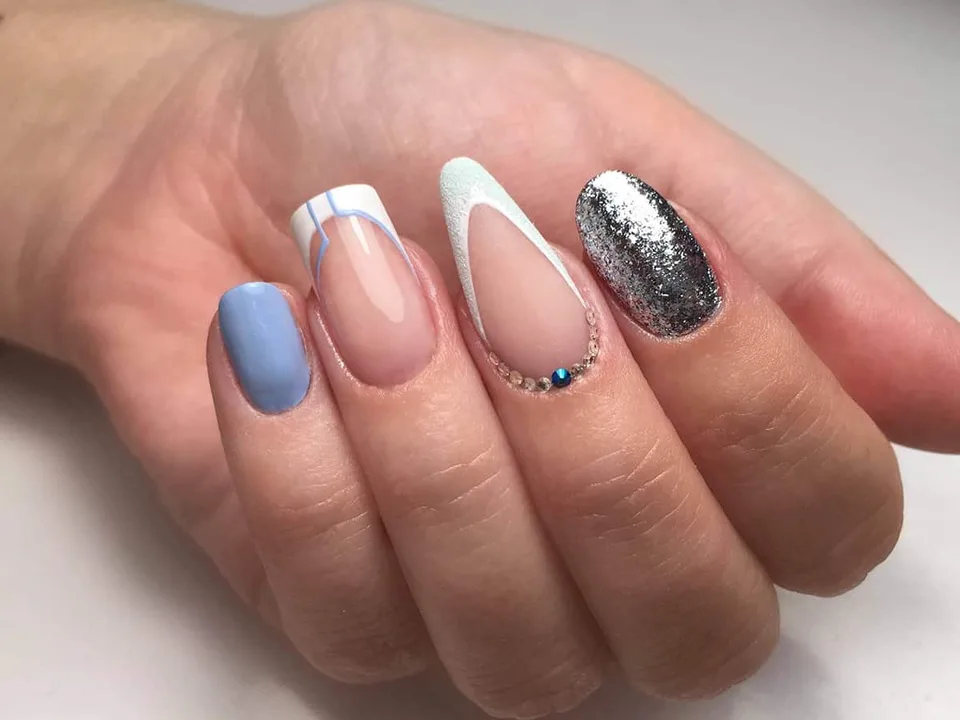
Want to learn professional nail enhancement techniques?
My Gel Base Plus course is the starting point for any aspiring nail technician.
15 hours and 20 lessons provide the foundations you need for impeccable work!
Both routes have advantages and disadvantages. The regional beauty therapy course is long and expensive—around 10,000 euros for 3 years. Its nail syllabus is fairly basic and somewhat outdated, so some schools add optional modules that
cost extra on top of the main course.
I have often taught students also attending beauty school who described significant gaps in its nail training.
On the other hand, that route opens up more employment opportunities and provides foundations for other beauty professions you may become interested in.
It also puts you closer to obtaining the technical qualification needed to open your own business, should you choose to do so later.
By contrast, private courses are shorter and less expensive. After a basic 3-day course and some practice, it may already be possible to find work. They are also more specialised and in-depth, provided you choose carefully: poor courses are not hard to find!
However, as explained above, a private-school certificate serves only as evidence of training on your CV. To open your own business later, you would also need beauty school or several years of practical experience in a beauty salon.

Can i work independently doing nails at home?
I am often asked this by people who assume that a VAT registration and issuing invoices are enough to work legally from home.
You can do so provided that you:
- hold the legally required qualification, whether in beauty therapy or another recognised qualification, as in Lazio;
- have a space at home that meets the applicable health, building and planning requirements for a nail studio. It must be used exclusively for the business, separate from residential rooms, with its own entrance, compliant installations and toilets reserved for clients;
- and, finally, have a VAT registration and issue the required receipts or invoices.
The fact that many people begin working at home or visiting clients’ homes—which is always illegal—does not mean they can continue that way indefinitely.
Starting at home with friends and family, then taking the first clients there, can feel easier and more comfortable. But I believe the business should then develop towards a proper setup, also avoiding unpleasant legal consequences.
Conclusions
What, then, do you need to call yourself a nail technician?
There is no internationally recognised official qualification, such as a degree, and the difference in skill between technicians can be enormous.
Essentially, you need training, experience and plenty of practice.
Taking a basic nail course, whether privately or through a regionally accredited provider, and then practising what you learn already makes you a nail technician.
The field is vast: you can offer basic services or specialise extensively in sculpting and nail art.
Your passion and motivation will guide you. Some will be content with basic salon services; others will pursue advanced techniques, world competitions or teaching.
To finish, I would like to offer some important advice: whether you are here to supplement your income, follow a passion or satisfy your curiosity, please maintain professional ethics.
Too often, I have met people interested only in a certificate for the wall rather than genuine learning.
“I will just practise on clients” should not even be a consideration, yet I have heard it countless times.
Advertising with photos of other people’s work is self-defeating, yet it happens every day.
As in any profession, we should aim to be competent professionals, whatever level of specialisation we pursue.
An employer wants someone capable and reliable, not someone dishonest who experiments on paying clients.
I will end as I began, with a saying from my schooldays: “quisque faber fortunae suae”—everyone is the architect of their own fortune.
Think about it.