Although “French manicure” suggests an origin in France, this classic manicure was created by an American!
The history of the french manicure
Its inventor is Jeff Pink, the renowned Hollywood makeup artist and manicurist who founded and still heads a well-known nail polish brand.
In the 1970s, while working in the American film industry, a director asked him to develop a versatile, elegant manicure that would suit every costume change and save valuable time.
Initially called the “Natural Nail Look”, it took its name from a product Jeff Pink sold to beauty salons: a whitening pencil used to brighten nail tips.
Later, the Parisian jet set adopted the Natural Nail Look as the official style for fashion shows. That was when the world came to know it as the “French manicure”.
Over time, the French manicure has evolved into colourful and artistic versions, with different shapes and techniques. We will explore them here, but first let’s clarify some terminology.
French manicure: structure and terminology
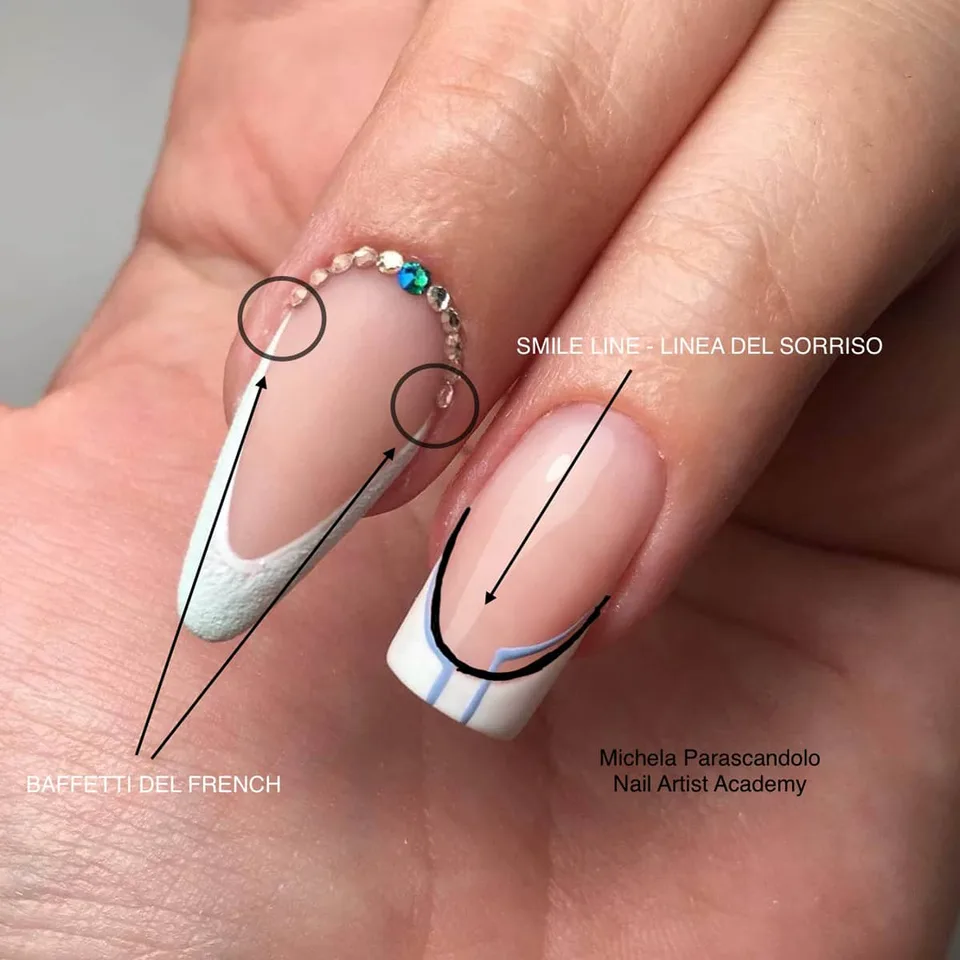
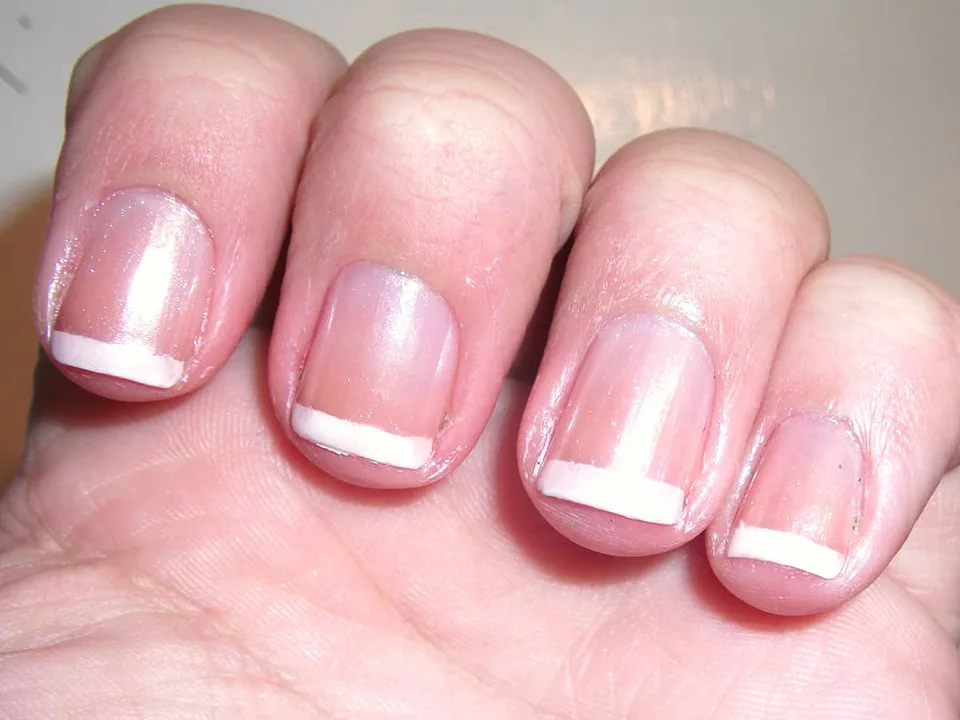
The boundary of a French tip is called the smile line because it resembles a smiling face in an emoji.
Its two side corners are often referred to in Italian as the “baffetti”, or little moustaches, of the smile line or French tip.
Types of french manicure
The most classic option is the white French tip. Creating it professionally requires attention to specific proportions and technical details, which I explain in my Gel Base Plus course.
The smile line can sit at different heights and have a shallower or deeper curve, as shown below.
Different types of French
It was once very popular to make the tip completely straight. This remains common in the USA, while Europe tends to favour a more rounded smile line.
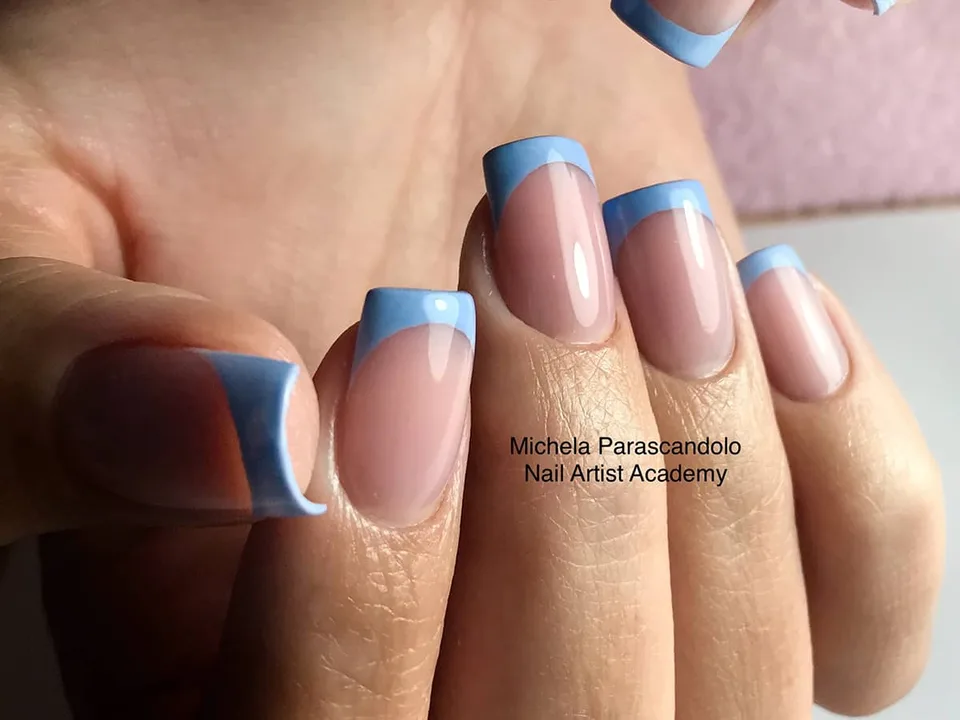
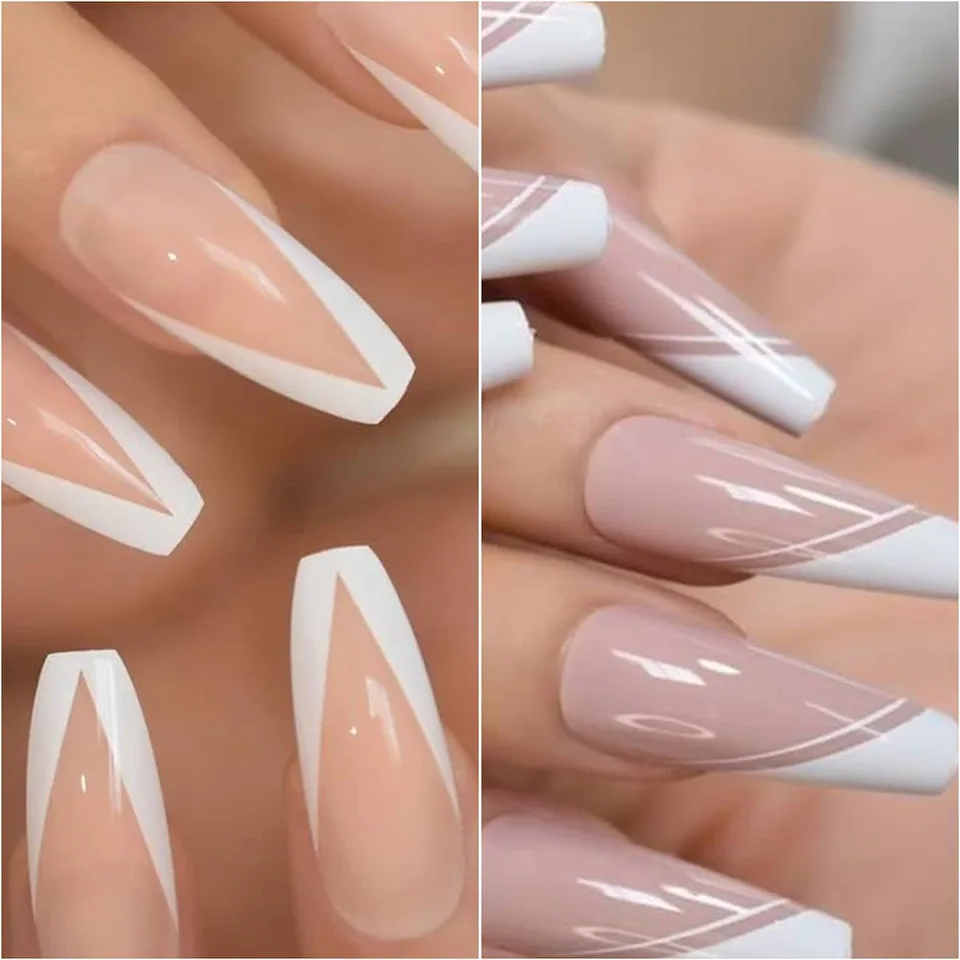
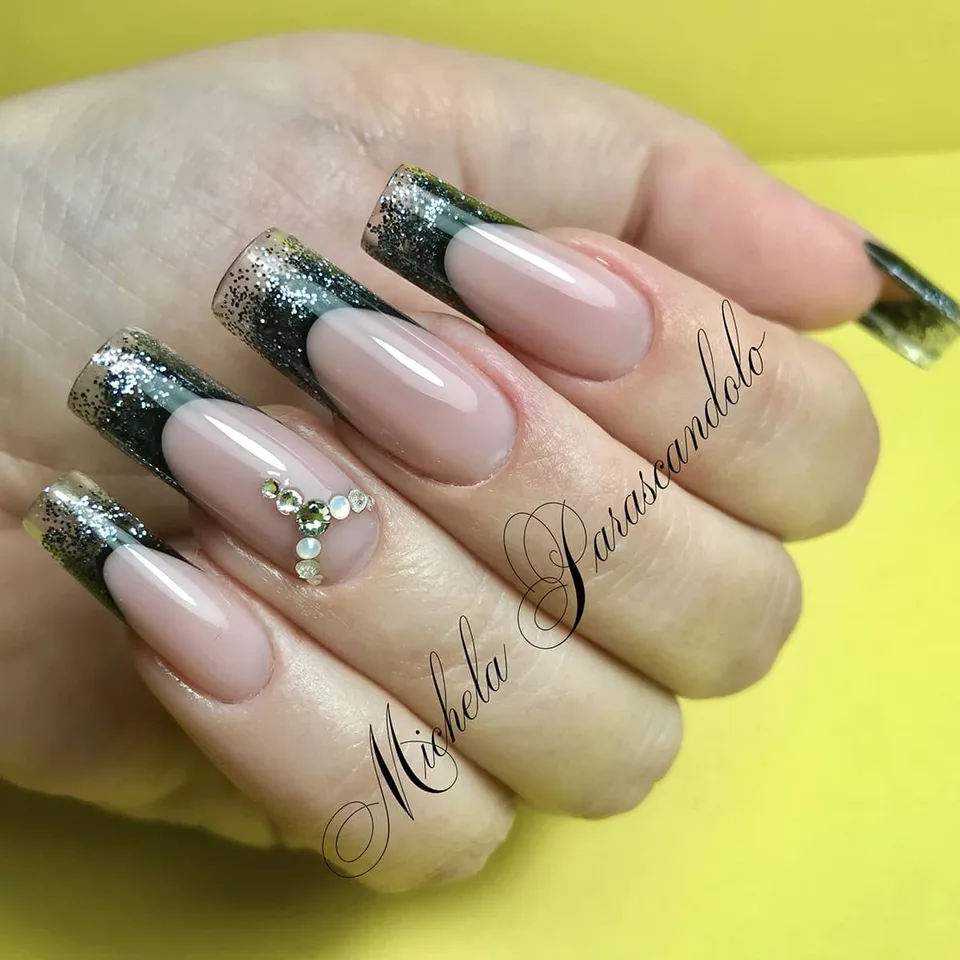
A French tip can be white, coloured or glittery, with countless variations in shape: angled, swept to one side and many more.
French manicure techniques and materials
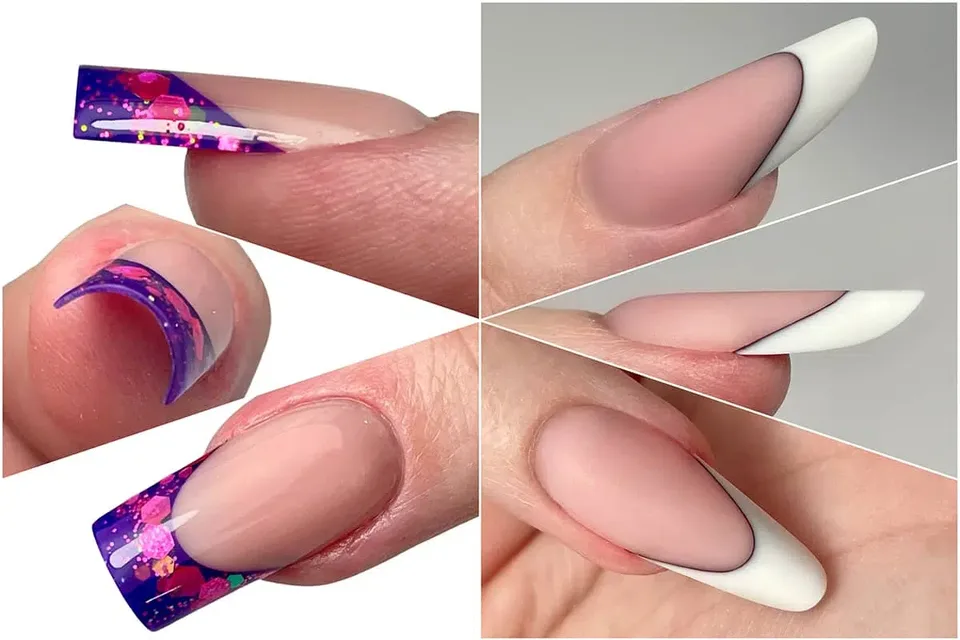
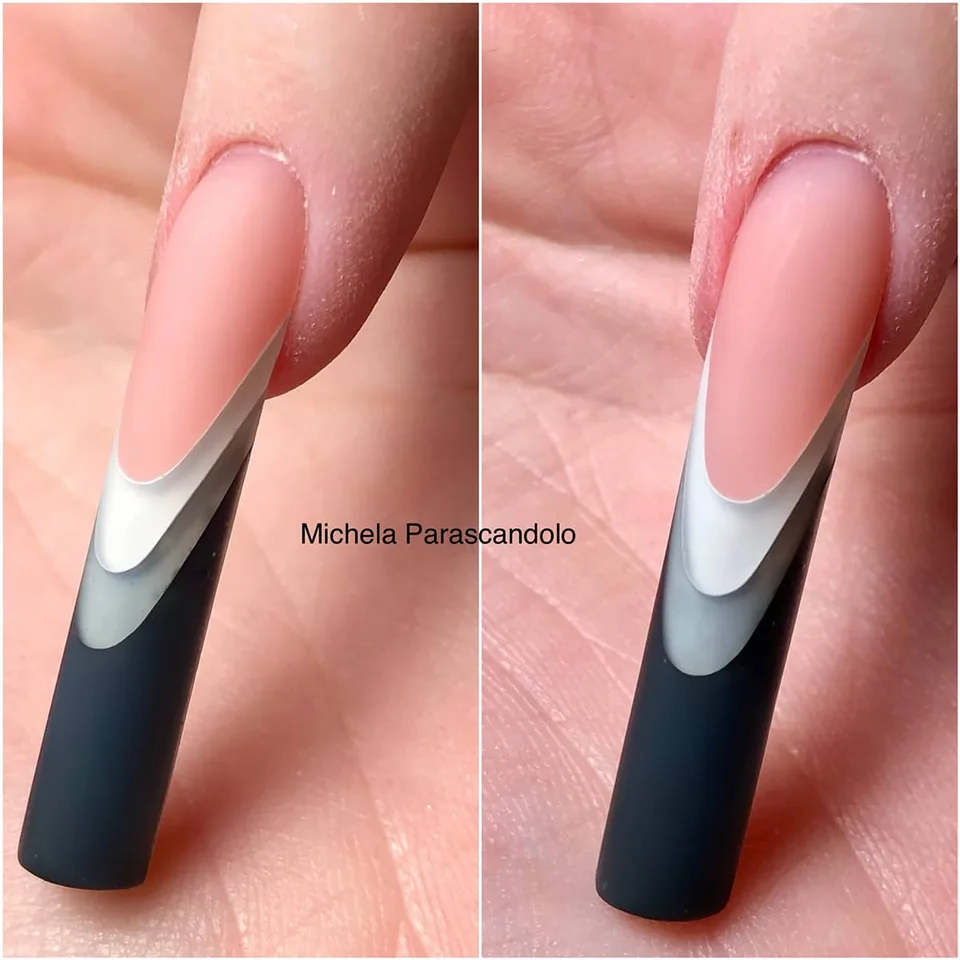
A French manicure can be created by painting it over the finished structure—the quicker method—or by building it into the structure, known as a sculpted French or reverse French. The latter is more technically demanding but allows unique colour effects.
Countless materials can be embedded in the French tip to create distinctive, on-trend effects.
Would you like to learn to create a sculpted french manicure?
Discover the Sculpted French and Reverse French course at my Academy.
DISCOVER THE COURSE
It is important to understand the products required for each technique. I still smile when I remember buying my first white gel to try a French manicure. I did not know it could be built into the structure; I assumed it was always painted on top, as I had seen my technician do.
Naturally, I bought the wrong product: a builder suited to sculpting the French tip, but not opaque enough for painting on the surface.
The result was an extremely bulky free edge overloaded with gel—an awful sight!
Only later did I learn that a flat, highly pigmented painted French requires a painting gel rather than a builder, so it does not distort the nail’s surface.
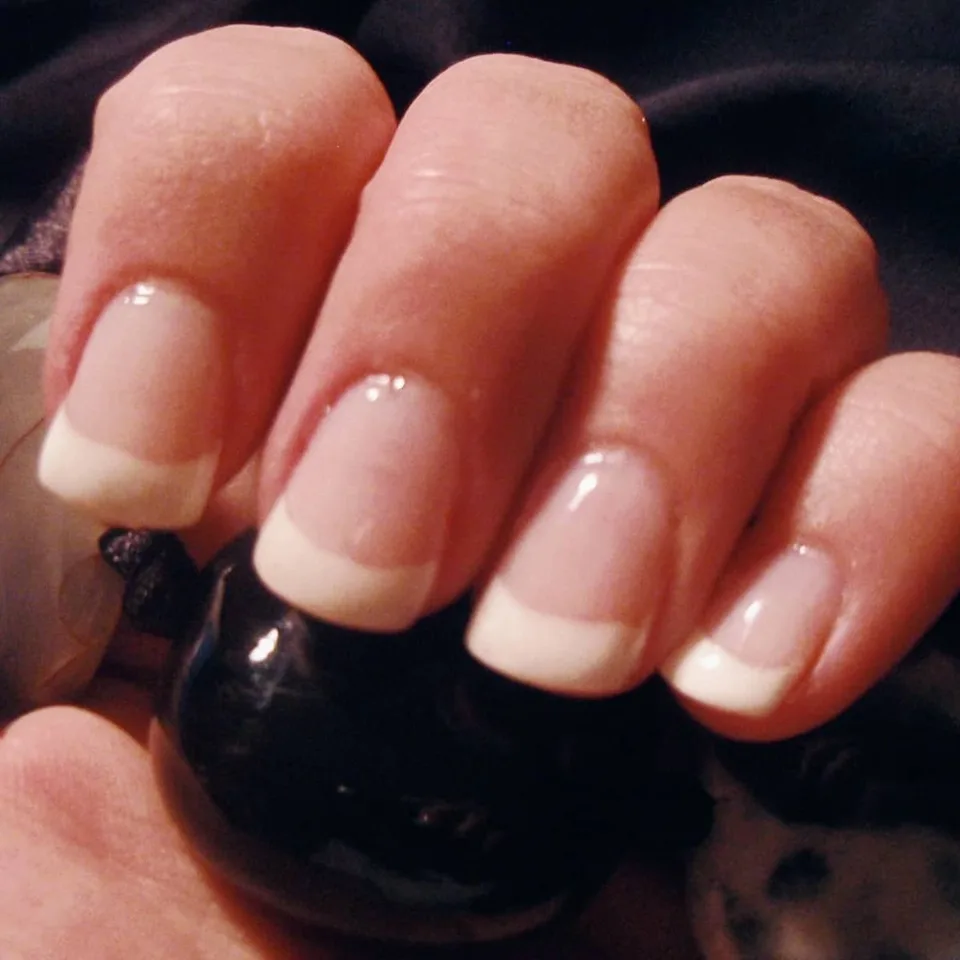
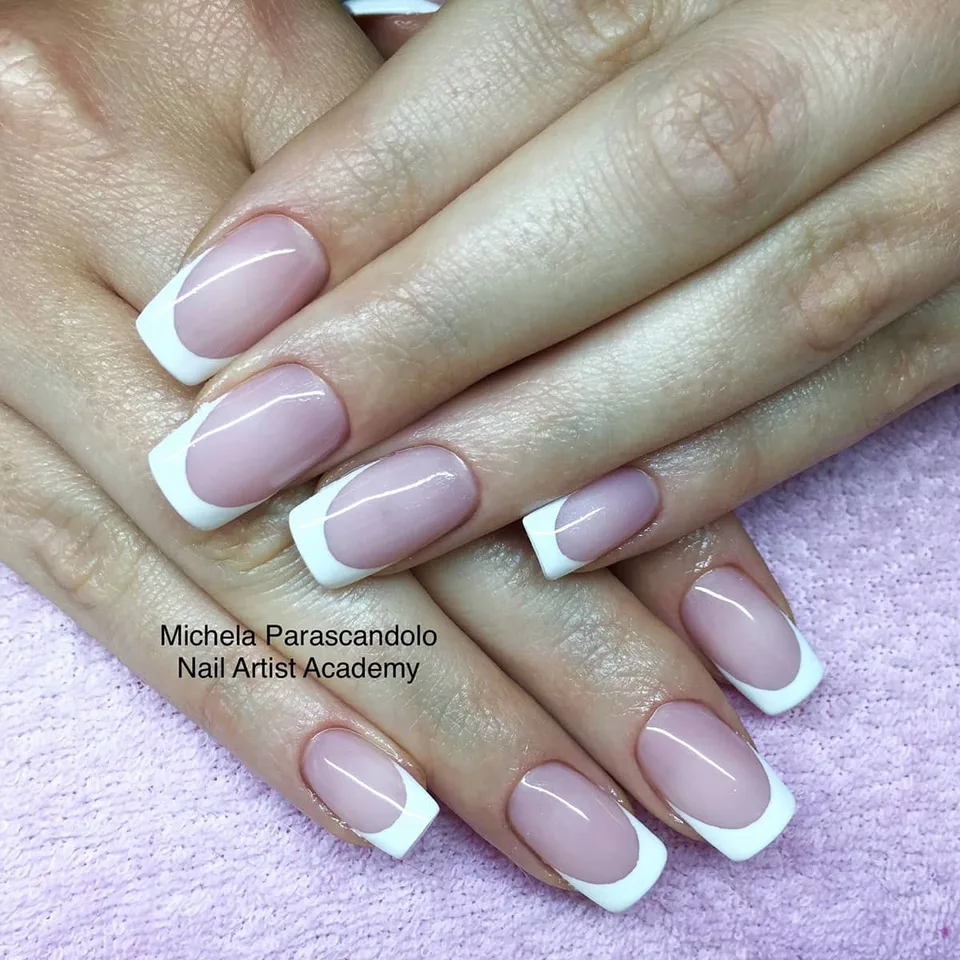
With a sculpted French, there are countless possibilities using sequins, colours, dried flowers and metallic flakes, as well as other materials too thick to sit on the finished surface.
You can even create double or triple French designs.
Finally, there is nail stamping: a quick decorative technique that can also help create a French manicure!
Should you charge extra for a french manicure?
I know many nail technicians who dislike French manicures because they struggle to create them accurately or quickly, and may charge extra for the additional time.
Should you charge separately?
It depends.
As you know, I use the time involved to set my service prices. For me, a solid colour and a French manicure take the same amount of time.
I have painted French tips for years and can work quickly and precisely freehand.
It comes down to practice: the more often we do something, the easier and more automatic it becomes. French tips are no exception!
However, if you are still building confidence and it takes extra time, a small additional charge may be appropriate on your price list.
If you are starting from scratch and would like a tutorial on drawing the correct proportions, watch this video and give it a try.
Enjoy practising!
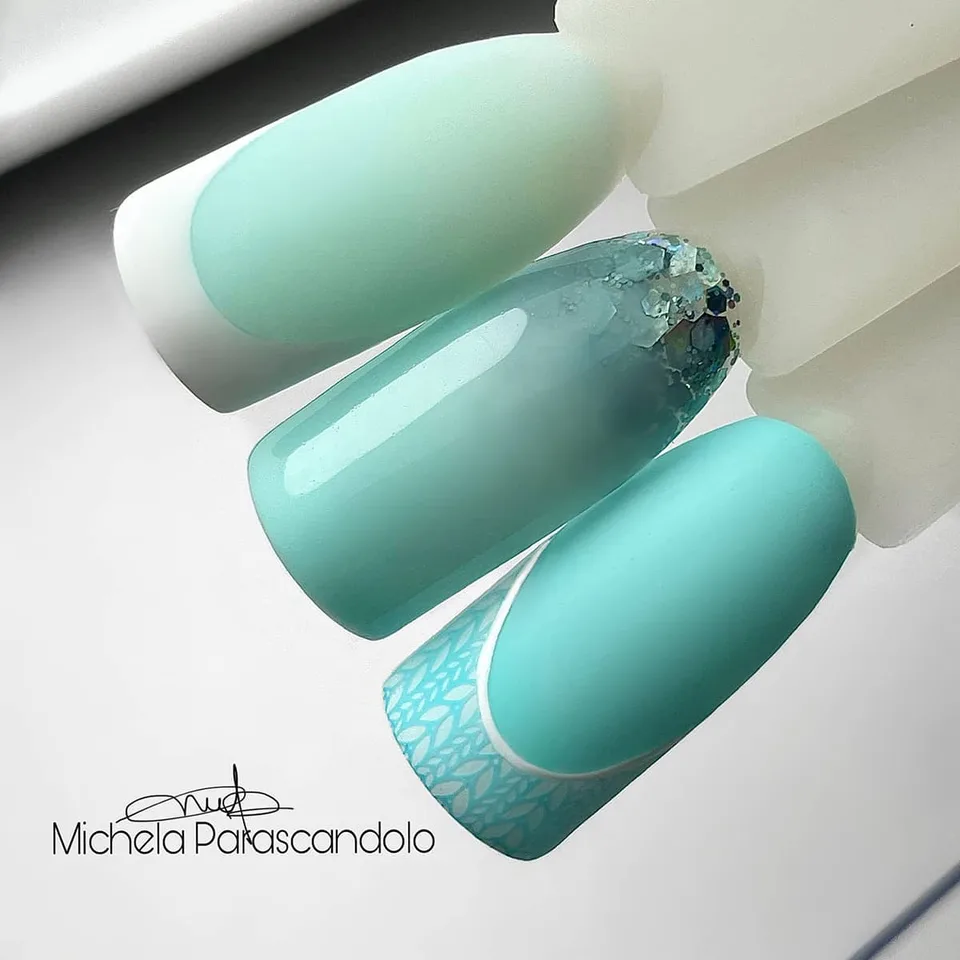
Learn to create a french manicure with stamping in this free tutorial
I explained the technique in this Facebook live session. You can watch the recording now.