
One of the questions I am asked most often during courses is: how much should I charge for extensions, overlays, infills and gel polish?
When discussing nail enhancement prices, it is essential to consider not only the different techniques available, such as gel, acrylic and acrygel, each with its own properties and costs, but also the area where the service is provided.
The price of gel nail enhancements can also vary with the quality of the materials and the complexity of the design.
Likewise, prices may depend on the experience of the nail technician or the length of the nails being sculpted.
In general, prices for gel, acrylic and gel polish services depend on:
- the geographical area;
- the premises where the service is provided;
- the nail technician’s experience;
- the work required and time involved;
- the type of material used;
- the quality of the materials.
The role of the nail technician
First, an important point: legally, at present, the role of the nail technician falls under that of a beauty therapist in most Italian regions, although regulations can differ even between municipalities in the same region.
In many cases, a nail technician cannot work without the qualification provided by a state beauty school, unless she works in a salon where someone holds that qualification or in a region offering state-recognised courses specifically qualifying nail technicians.
Average price list for nail enhancements in italy
As we have seen, nail enhancement prices vary considerably with location, professional experience and materials.
In Italy, the average price for a new set of gel, acrygel or acrylic nails is between 35 and 70 euros.
The infill service, needed to maintain the appearance of enhancements, generally costs less than the initial application, between €25 and €50.
Bear in mind that additional services such as nail art or special materials like Swarovski crystals, as well as a French manicure or dry manicure , can increase the final price.
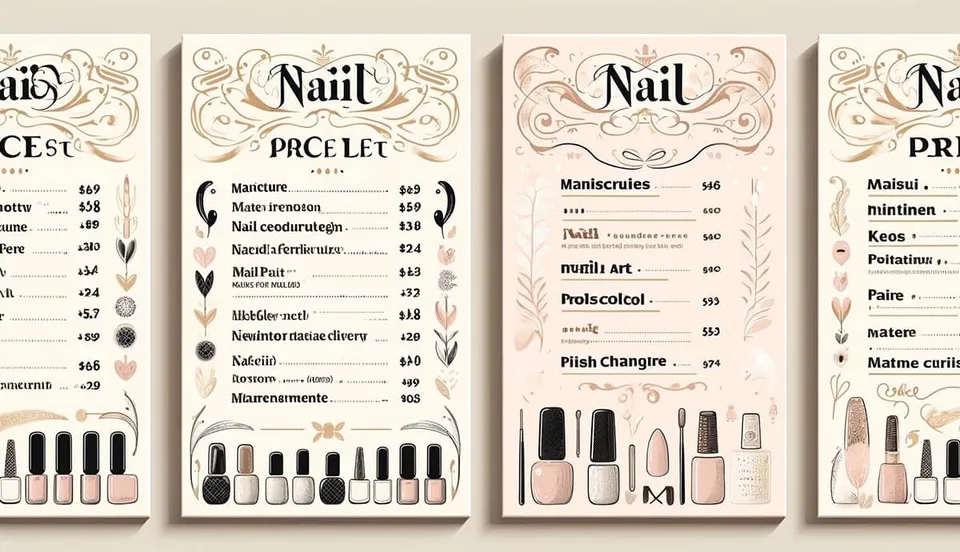
If you want the service at your home, prices may be higher to cover the beauty therapist’s travel costs.
Services for toenails may also have slightly different prices because they require a different application technique.
With that overview in mind, let’s look at how the factors listed above affect prices.
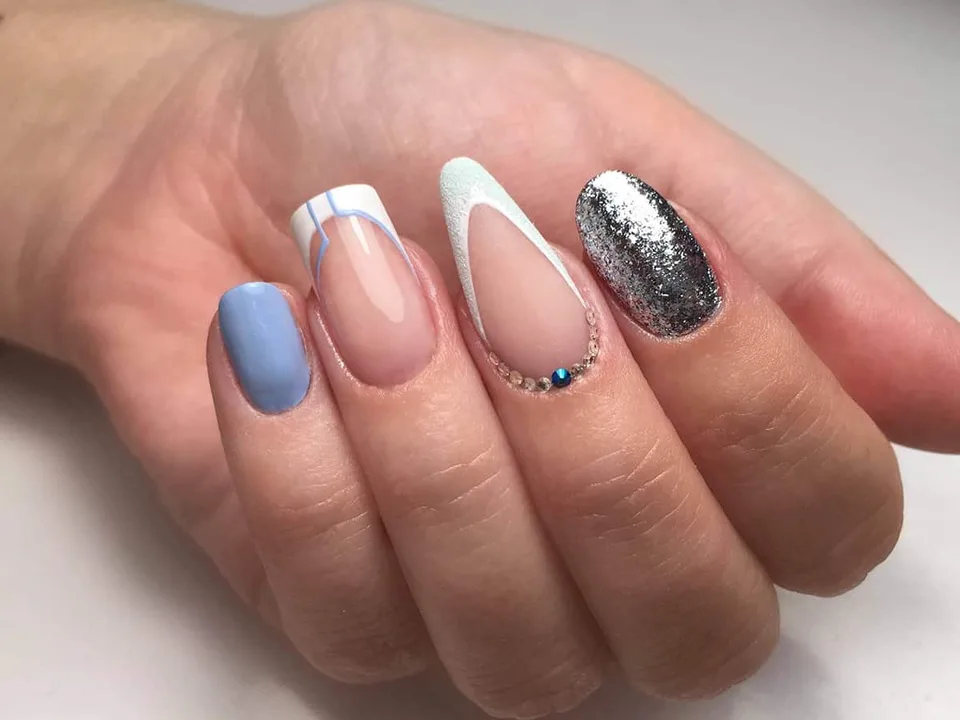
Want to learn to create classic nail shapes professionally?
In my Gel Base Plus course, you will learn to create oval, almond and square nails, as shown in the photo.
The geographical area
As we have seen, prices can vary considerably between Italian regions, and sometimes within the same region, for example between a regional capital and a small town.
I recommend visiting different parts of your city or simply checking the prices of local salons and nail technicians online. Most beauty salons have websites, and online marketplaces carry adverts from independent technicians, a topic we will return to later.
This helps establish the price range in your local market.
For example, in Emilia-Romagna, a salon gel polish service may cost from 15 to 45 euros, extensions from 20 to 100 euros and an infill from 15 to 80 euros.
In Sicily, the ranges change considerably: gel polish may cost 5 to 20 euros, extensions 10 to 50 euros, and an infill 7/8 to 35 euros.
These are typical price ranges, of course, with exceptions above and below them.
This helps explain why, in Palermo for example, a client is unlikely to pay 100 euros for extensions unless the salon offers exceptionally high quality that nobody else provides.
Remember that every region also has discerning clients who are willing to pay for something exclusive, but that exclusivity must come with genuinely exceptional quality.
The premises where you work
A salon or a home?
The law prohibits working from home unless the premises comply with the local health authority’s strict requirements and you have a VAT registration and the appropriate state qualification.

We know, however, that most nail technicians start gaining experience at a home workstation, practising on friends and family. As their experience grows, they may seek work in a salon or open their own.
Naturally, someone working from home is unlikely to charge the same prices as a salon or a VAT-registered professional, because their overheads differ considerably. Running a salon involves many additional expenses, including electricity, heating, employees, insurance, taxes and rent. These must be calculated carefully and included in service prices.
That explains the price difference between home-based and salon work.
The nail technician’s experience
Have we just started training, with only a basic course behind us?
Or are our walls covered in certificates, and have we mastered a range of enhancement and nail art techniques?
Training costs money, as well as time spent practising and refining our work.
Greater skill and knowledge, together with artistic training, increase the value of our work and allow us to offer services that stand out from the crowd.
People often tell me: “Someone else charges two euros less, so clients go to her even though her work is not quite as good as mine.”
This is the familiar price war in which many feel trapped.
Yet there is a way out.
Those who heavily underprice their services rarely have the training needed to rise above low-to-average quality.
This is where we need to focus. When the quality is similar, clients naturally choose the cheaper option.
Everyone starts with the basics, and beginner work is not yet polished. Nail enhancements, like any manual craft, require considerable time, in-depth study and plenty of practice to reach excellence.
Think of a Murano glassblower: the first lessons do not produce masterpieces. It takes extensive practice and experience before the creations command high prices.
At first, we all have to contend with fairly standard prices because of limited experience and competition at the lower end of the market.
But with genuine passion, rather than just the prospect of earning money, we can gradually invest in training and reach a high standard, offering services that most people charging 5€ for nails simply do not provide.
Want to improve your skills and grow as a professional?
Discover my online nail enhancement and nail art courses. Once purchased, they are yours forever and you can watch them as often as you like. Filmed in 4K HD from two camera angles.
Although some clients cannot distinguish between lower- and higher-quality services, just as many recognise and appreciate the difference and are willing to pay more.
Do not overlook thoughtful details such as impeccable cleanliness of the workstation and tools, sterilisation products, a complimentary coffee and chocolate, appointment reminders and customised colours. These are all gestures that may seem obvious but are not offered by everyone. They help distinguish your service and can make clients happy to pay a little more than they would elsewhere.
Type and quality of material used
Which material am I using?
Traditional gel that also needs filing?
Acrylic that does not need a lamp? Acrygel? Soak-off gel?
Each of these materials suits different types of extensions or overlays, and some are much quicker to work with than others.
This matters because time is a very important factor, as I will explain shortly.
Today, many brands offer an almost endless choice of materials and prices.
A 30 ml jar of gel can cost between 10 and 50 euros. Sometimes the difference reflects product quality; sometimes you are paying for the brand.
In any case, if and when I choose a premium-priced range, I need to charge a little more and communicate that premium quality clearly to my client, perhaps by explaining the products’ qualities.
Type of work to be performed and time taken
The type of work strongly affects the appointment length, so it is important to know in advance what the client wants.
A traditional gel polish service may take an hour, while gel, acrygel or acrylic extensions can take 3 or 4 hours when substantial length and nail art are requested.
How do you set a price for each service?
My advice is to put a VALUE on your time, rather than only on the product.
For example: I have just started working with clients and completed a basic enhancement course and a gel polish and dry manicure course.
In my city, gel polish without a dry manicure costs 10 to 30 euros. My results match a good salon’s in appearance and durability. If the salon charges 30 euros for 45 minutes, while someone at home charges 10 for a messy application, I might charge 15/20€.
If my gel polish service takes an hour, I am valuing my time at 1 hour = 15/20 euros. A gel extension service taking 3 hours should therefore cost around 45/60 euros, or perhaps 40 while I am starting out.
An infill taking 2 hours would cost 30/40 euros.

If I use premium products, I keep my prices a little higher; with less expensive products, I can lower them slightly.
If I add a dry manicure taking a quarter of an hour, at 1 hour = 15/20 euros, that quarter-hour is worth 4/5 euros. I therefore add 4/5 euros for the manicure.
The same applies to nail art.
I might include a couple of Swarovski crystals, quick decorations or stickers in the price. More complex work taking 10/15/20 minutes would carry an extra charge calculated in the same way.
Does the client return after 6 weeks with 2 broken nails?
Does each repair take 10 minutes?
Then I charge for 20 extra minutes: repairing both nails adds about 6/7 euros to the infill price.
It is up to us to decide whether to offer complimentary extras or discounts, and how much, according to the situation.
Remember, though: starting with rock-bottom prices makes later increases much harder to justify and get accepted.
Starting with prices that are not necessarily high but give our work its proper value leaves room for discounts, complimentary extras and promotions that clients appreciate. This naturally assumes good-quality training.
There are also extreme examples of internationally renowned champions or educators charging up to 500 euros for a set. Believe it or not, clients do pay that.
Not everyone can create flawless extra-long square nails with a sculpted French and intricate nail art.
Few offer such a service, so those who do can command those rates. Services such as bridal nails can also be very profitable, provided you offer an impressive range of options.
Consider clients who bite their nails: their material of choice is acrylic, which very few technicians know how to work with.
Learning the technique lets you offer exceptional durability for their nails and reach a market that others cannot serve as effectively.
The key is to STAND OUT!
Differentiate yourself through the quality and range of your services, and escaping the price war becomes possible.
It takes time, practice and training, but the investment will pay off.
Final considerations and suggestions
Setting your rates involves several factors if you want a fair and appropriate price that neither undervalues nor overvalues your work.
- Always maintain professional standards: do not offer treatments or nail art you have not studied and practised sufficiently to perform correctly. Charging clients for practice is NEVER appropriate; experiments should not be charged for!
- When booking an appointment, find out exactly what the client wants so you can estimate the time and cost. Ask new clients for a photo of their hands if helpful: they may request an infill without realising that some nails need new extensions;

- Create a comprehensive price list that clearly explains your policies. Share it with the client to avoid misunderstandings at payment time, or display it at your workstation;
- As your skills grow and you add services and products, update your price list too, using common sense rather than making sudden, excessive increases.