Have you ever wondered how to choose the right colours for nail enhancements and nail art?
Have you ever struggled to understand the differences between the types of colour products available? 🤔
Let me introduce you to the endless possibilities colour offers, whether you are sculpting nails or creating nail art.
Understanding each type will help you make more informed choices about what to buy and how to use it.
Colour in nail enhancements
When creating an overlay, extension or infill, we have many options: keep a natural look and apply top coat directly to the structure, create a French manicure or baby boomer, or apply one or more colours.
But which materials should we use?
Here are some general guidelines:
- for a traditional gel polish service, use gel polish colour;
- for a soak-off, gel or acrygel structure, use gel polish, colour gel or a coloured builder;
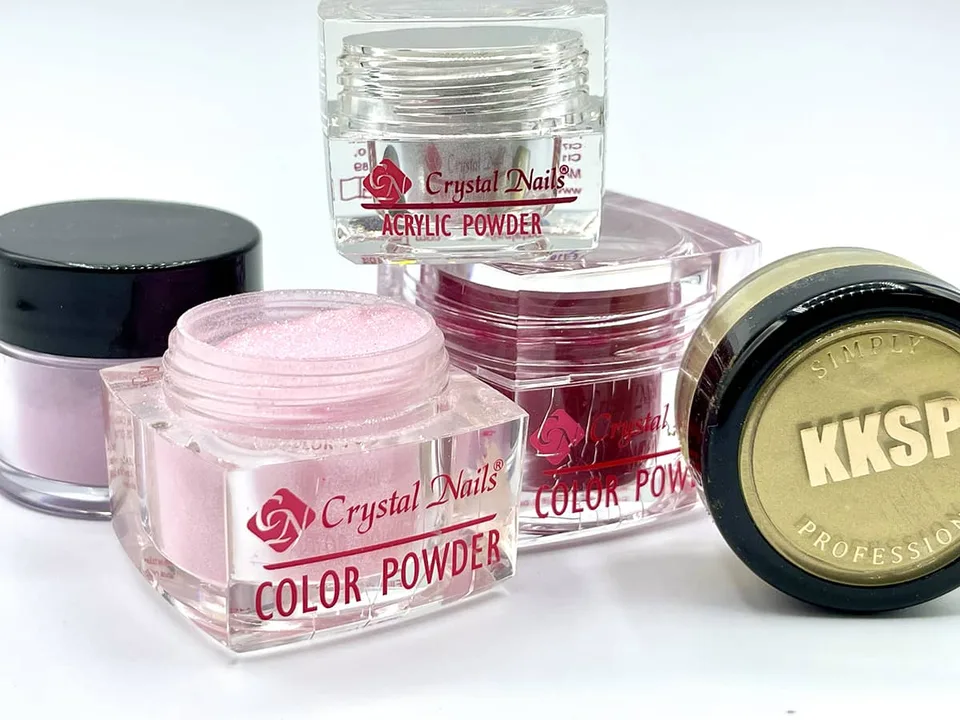
- for an acrylic structure, use gel polish, colour gel or coloured acrylic powders designed for French manicures or embedded effects.
Notice one important point: gel polish can be used over gel, acrygel, soak-off or acrylic enhancements, but colour gel cannot be used over a traditional gel polish base. Colour gels are more rigid than the highly flexible gel polish base, so the colour may soon chip off.
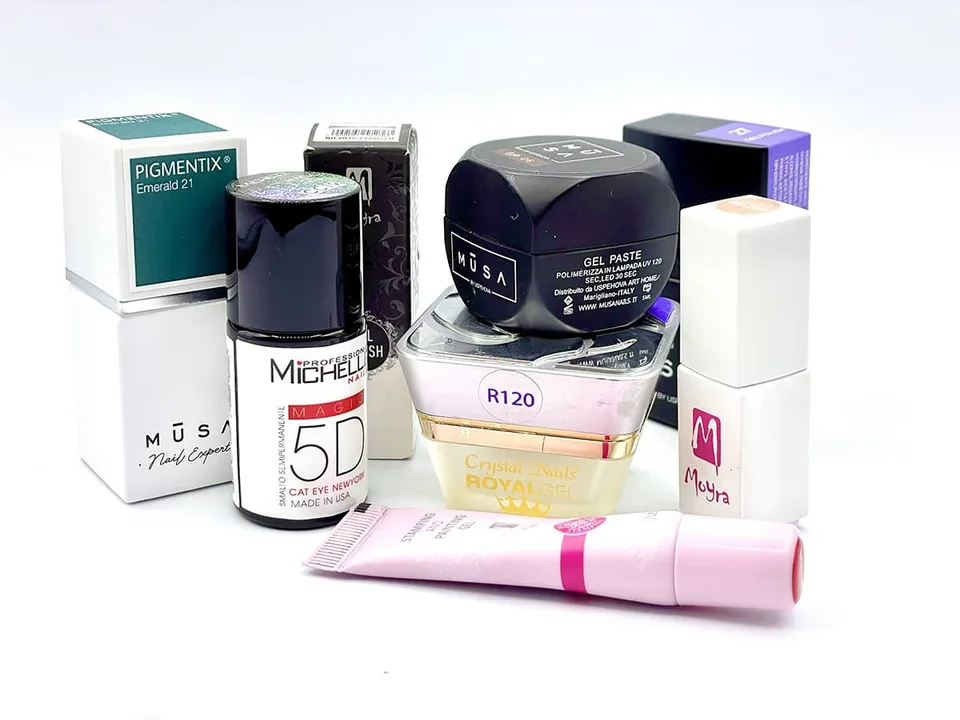
If you have not yet tried different colour gels, gel polishes and coloured acrylic powders, you may not have noticed that they can be grouped by several properties:
- flexibility: gel polishes are the most flexible, while colour gels and painting/paste gels are more rigid. The latter are used only for decoration;
- consistency: some products are very fluid and self-levelling, while others are so thick that the brush leaves grooves during application. If these do not self-level, they are better suited to nail art;
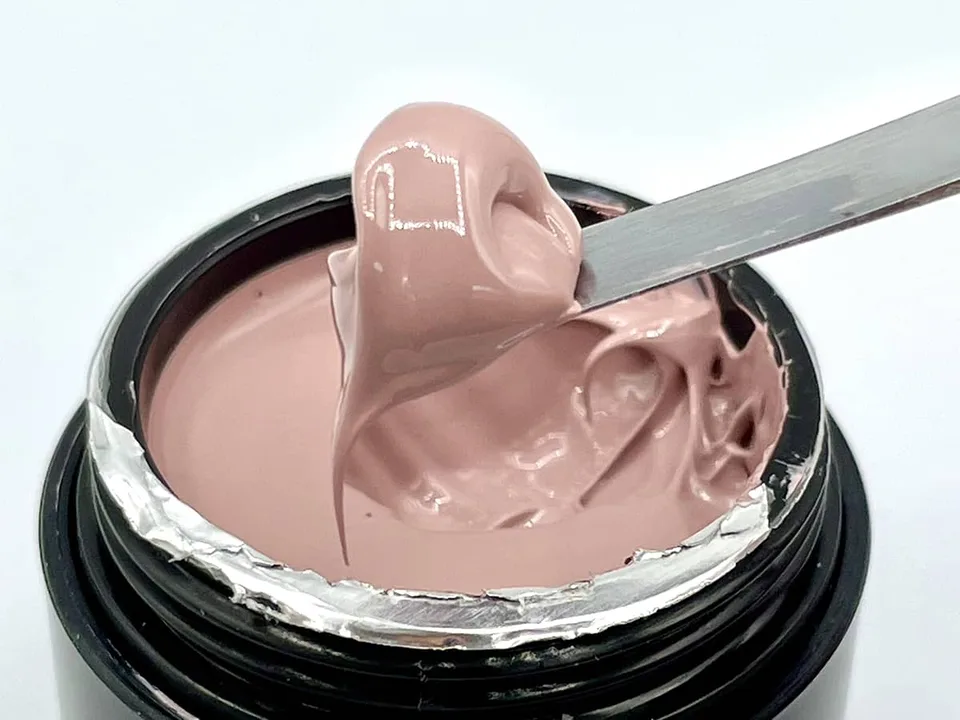
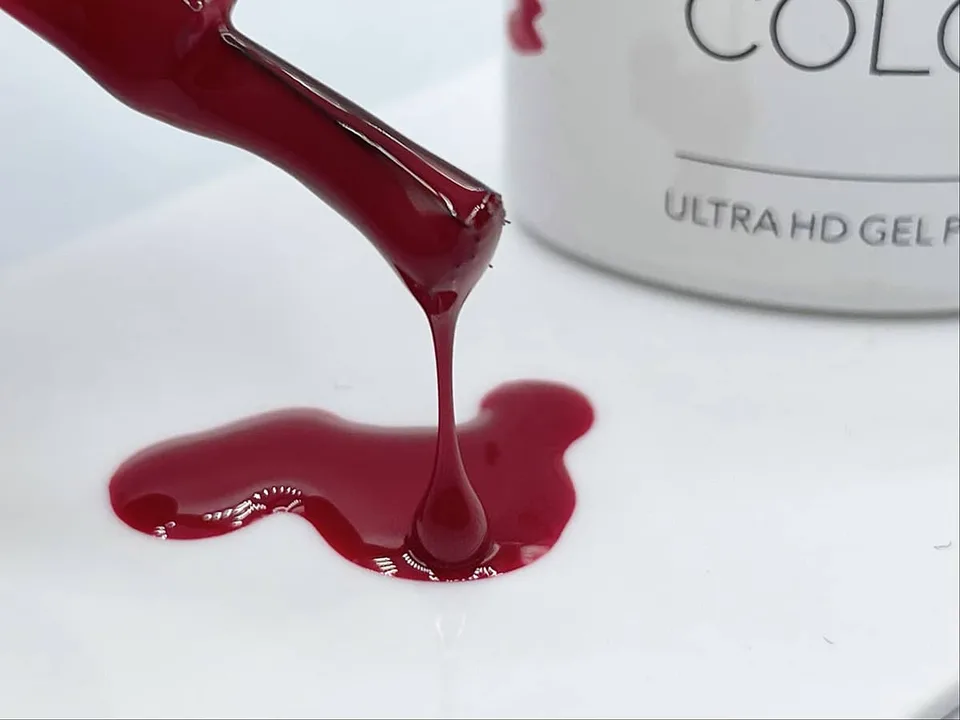
- pigmentation: highly pigmented colours provide greater coverage and may need only one coat, although not every brand offers them;
- inhibition layer (also incorrectly called a dispersion layer): some colours leave one, while others do not. Either can be used over a structure, provided it is cured properly;
- soak-off capability: gel polishes and acrylic powders can be dissolved in a suitable remover, while other colours require a hand file or e-file;
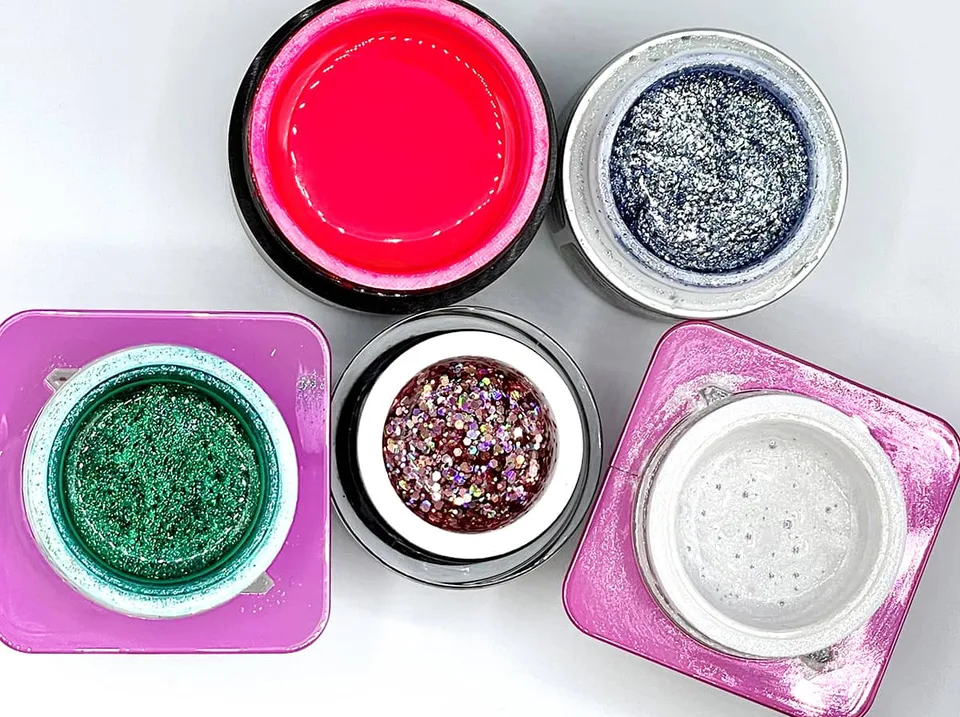
- texture: colours may be plain or contain glitter, flakes, sequins, metallic powders and much more;
- coloured sculpting products: alongside coloured acrylic powders, there are coloured builder gels and acrygels. These products are not intended for thin, polish-like application: they are used to build all or part of the nail structure.
Tip: did you know that colours can be mixed together?
If you do not have the shade you need, you can create it. For example, mixing black and white makes grey.
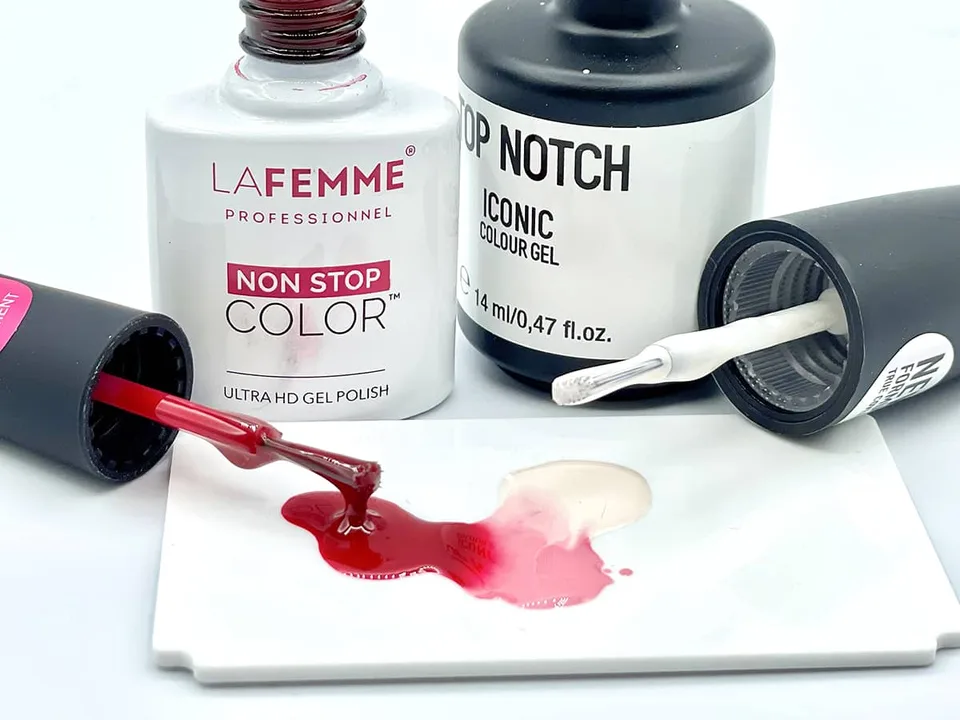
As a general rule, mix colours of the same brand and type to avoid durability problems: gel polish with gel polish, no-wipe colour gels with one another, and so on.
Colour in nail art
This is where we can really get creative!
There are countless nail art techniques, so almost every type of colour product can be used for decoration in some way.
- Gel polish colours: as well as full-nail application, they are ideal for gradients and filling medium-to-large designs. Fine lines are more difficult because the colour tends to spread;
- No-wipe colour gels: versatile products for almost everything, from full-nail application to gel painting, gradients and fine lines. They also suit slightly raised designs applied over a top coat, which must also be no-wipe;
- Colour gels with an inhibition layer: best suited to full-nail application, although they can also be used for painting if the inhibition layer is not excessive. They must then be sealed;
- Painting gels/paste gels (without an inhibition layer): highly pigmented products used only for nail art. Ideal for tiny details and very fine, strongly coloured lines. Applied over an entire nail, their rigidity could cause chipping;
- Stamping colours: various types of polish formulated for stamping;
- Powder pigments: different pigments for a wide range of decorative effects;
- Watercolours: essentially the same as those used for painting, provided they are good-quality cream formulations;
- Acrylic paints: the same guidance applies as for watercolours;
- Gels for three-dimensional designs: very thick 3D gels and similar products allow you to create miniature sculptures on the nails.
Start your training at my academy
The most comprehensive online course platform in the nail world.
You will find courses in both nail sculpting and nail art.
Once you have purchased a course, it will be available on your profile forever.
- Sculpting gel (plastiline): ideal for raised decoration, from subtle relief to substantial designs;
- Acrylic powders: as well as building parts of the nail structure, these suit three-dimensional decorations of any size;
- Foil gel: a product specifically designed to adhere transfer foil;
- Spider gel: a distinctive product that stretches into fine strands resembling a spider’s web.
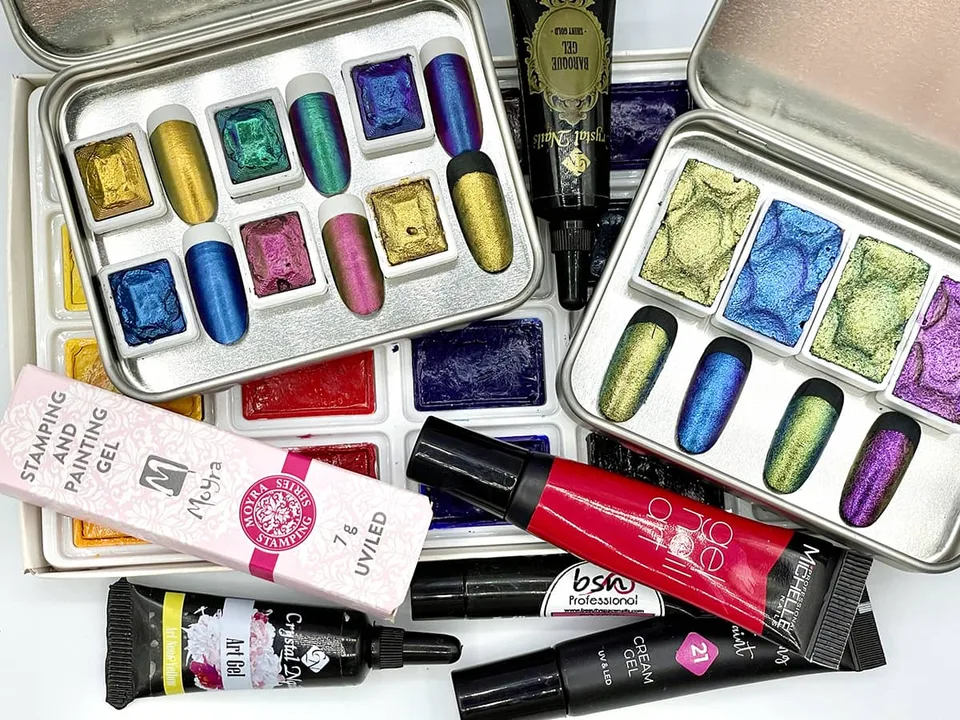
As you can see, there are many products and endless possible combinations.
Some materials can even be combined: sculpting gel can be coloured with watercolours or gels, and acrylic with acrylic paints, to name just a few examples.
Listing every combination, exception, property, limitation and particular feature would probably fill a book.
Even within the same product category, colours differ slightly from brand to brand.
Some brands offer several ranges of the same type, such as gel polish: a less expensive range with less pigment, a more expensive one with greater coverage, or another that is more fluid and self-levelling.
This is why the product market can seem chaotic to beginners.
At first, I recommend following your educator’s advice. She can suggest the products best suited to the course and your budget.
As you experiment, you will develop your own preferences: thicker or more fluid? Acrylic or sculpting gel? More pigment, even at a higher price? Stamping with polish or gel paint?
Product properties are objective, but preferences are often subjective, and we each develop our own over time.
With experience, you will also discover that one brand is unlikely to meet every need, so you will start choosing products from different companies.
Before buying a colour, always read about its properties—or better still, ask—to check that it suits your needs.
As I always say, there is no single best colour product: there is the product whose properties best suit the work you need to do!