Gel, acrygel and acrylic: a little history
To understand the difference between traditional builder gel and acrygel (also known as polygel or acrylic gel), and why acrygel came onto the market, we need to go back around fifteen years, when gel and acrylic were virtually the only options for nail extensions.
There was little choice at the time. Even opaque “cover” builder products did not exist: those natural pink shades that now help us conceal the nail plate, especially when creating a French manicure.
In Italy, as in much of Europe, gel became popular, unlike in the Americas. For some reason, a rumour had spread that acrylic was toxic and harmful.
Perhaps this was because the monomer has a very strong smell (odourless versions are available today), or because it is not at all easy to work with. Whatever the reason, acrylic never became as popular here as gel.
Gel was easy to work with and had no strong smell, curing under a suitable lamp. However, it lacked certain properties of acrylic that were particularly useful.
So nail cosmetics manufacturers developed a new type of resin combining some of the properties of both products. Their aim was to bring together the strength of acrylic and the ease of working with gel: acrygel.
Properties, differences, distinctive features and my own observations
Let us start with something these three products have in common.
Every nail enhancement product currently on the market belongs to the family of plastic resins. These are cosmetic-grade materials, of course, rather than low-grade plastics, but they are still resins.
At the time of writing, various environmental laws already require companies to adapt their materials. Many companies are developing, or have already developed, fully biodegradable and soluble nail polishes and related products to reduce plastic pollution.
With that in mind, let us look at the differences between gel, acrygel and acrylic.
Gel: properties and uses
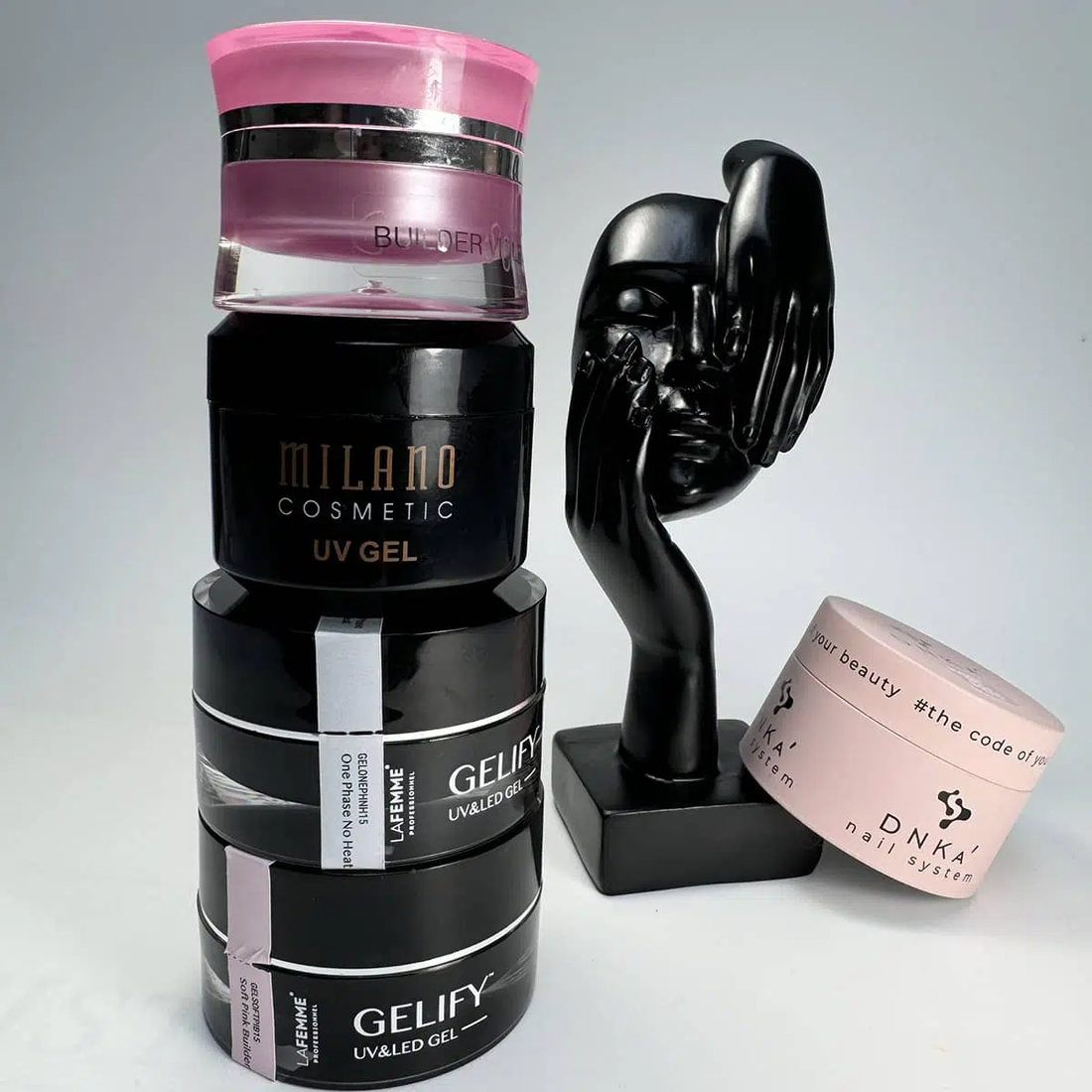
Gel now comes in an enormous range of formulations. Here is an overview:
- Colour: clear, milky, coloured, with glitter or other decorative elements — the possibilities are endless;
- Heat: curing can cause a more or less noticeable exothermic reaction (heat release), depending on several factors, which I explain in my Gel Base Plus course. “No heat” formulas are also available, designed to greatly reduce or eliminate this discomfort;
- Curing: all gels cure under a UV/LED lamp. Times vary with the product and the amount applied, averaging 30/90 seconds;
- Smell: none or very mild; some products are even scented;
- Consistency: formulations range from jelly-like and extremely thick to thixotropic (changing consistency as you work) and very fluid. Thicker formulas can comfortably be used on 5 nails at a time;
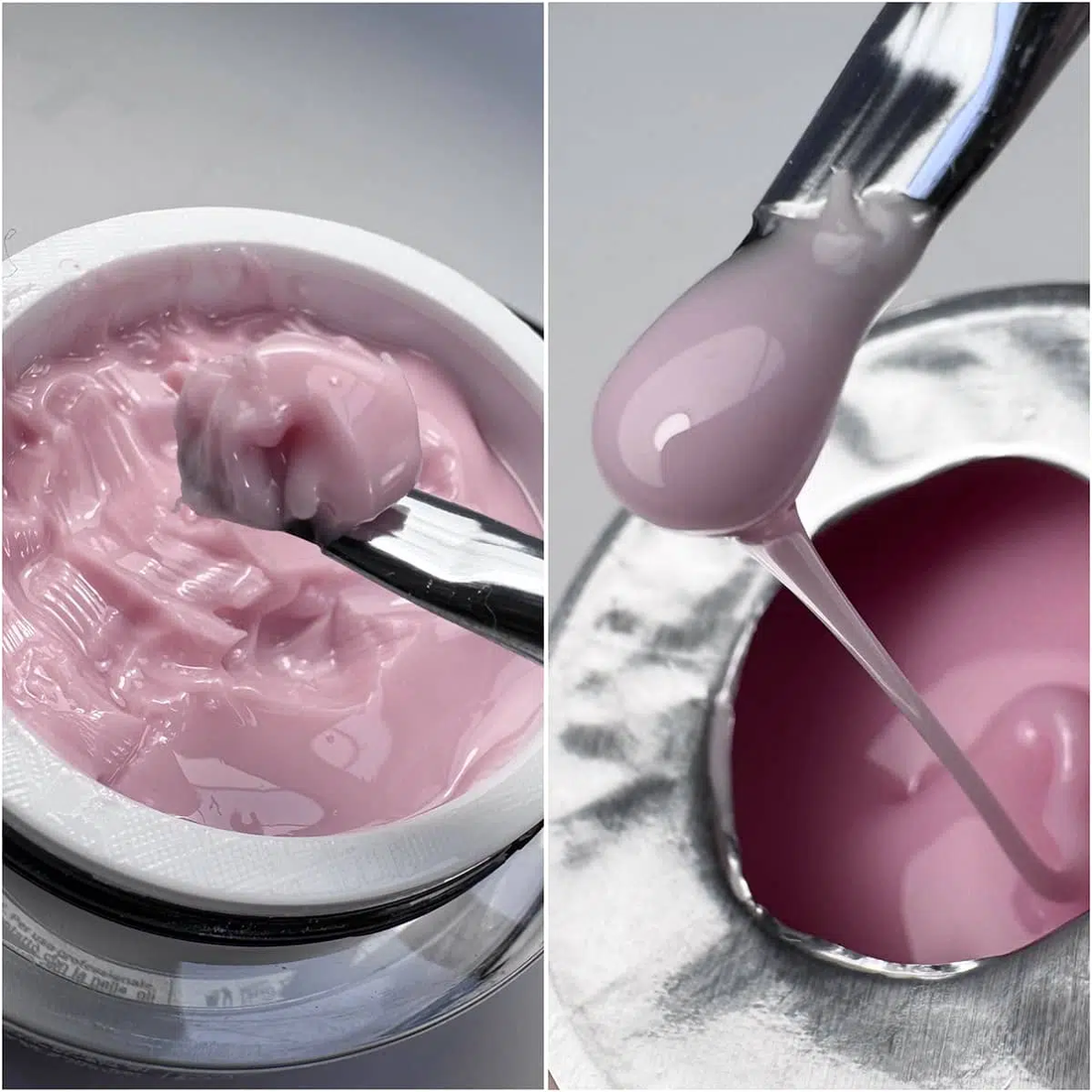
- Flexibility: some gels are very rigid, such as those containing fibreglass, and may be ideal for long extensions. Others are much more flexible and better suited to certain nail types;
- Pinching: some gels can be pinched and others cannot. If you try to pinch an unsuitable gel, it will break or spring back;
- Gel can be used in a single-phase system, with one product acting as base, builder and top coat, or a three-phase system, with separate base and top coats.
As you can see, this category offers a huge choice. When people ask me for the name of the best gel, as though searching for the holy grail of nail enhancements, I always say: no gel is universally better than another.
Instead, choose the type of gel whose properties best suit the service and the nails you are working on.
Gel is generally quite easy to work with. For beginners in particular, slightly thicker formulas can give you more time to shape the nail structure.
Flexible formulas are very soft to file. More rigid gels are harder, but still relatively easy to file.
When used with the right technique, self-levelling formulas can create a surface so smooth that filing is unnecessary. Thicker formulas will always need at least some filing, partly because they tend to leave brush marks.
Gel is applied with dedicated brushes, almost always with synthetic bristles and a flat or rounded shape. Spread it gently, using very little pressure.
Learn more about brushes for nail enhancements and nail art.
Although rigid formulas are harder, even these gels can be appealing to someone who habitually bites their nails. Gel may therefore not be the best choice for severe nail biting.
Acrylic: characteristics and use
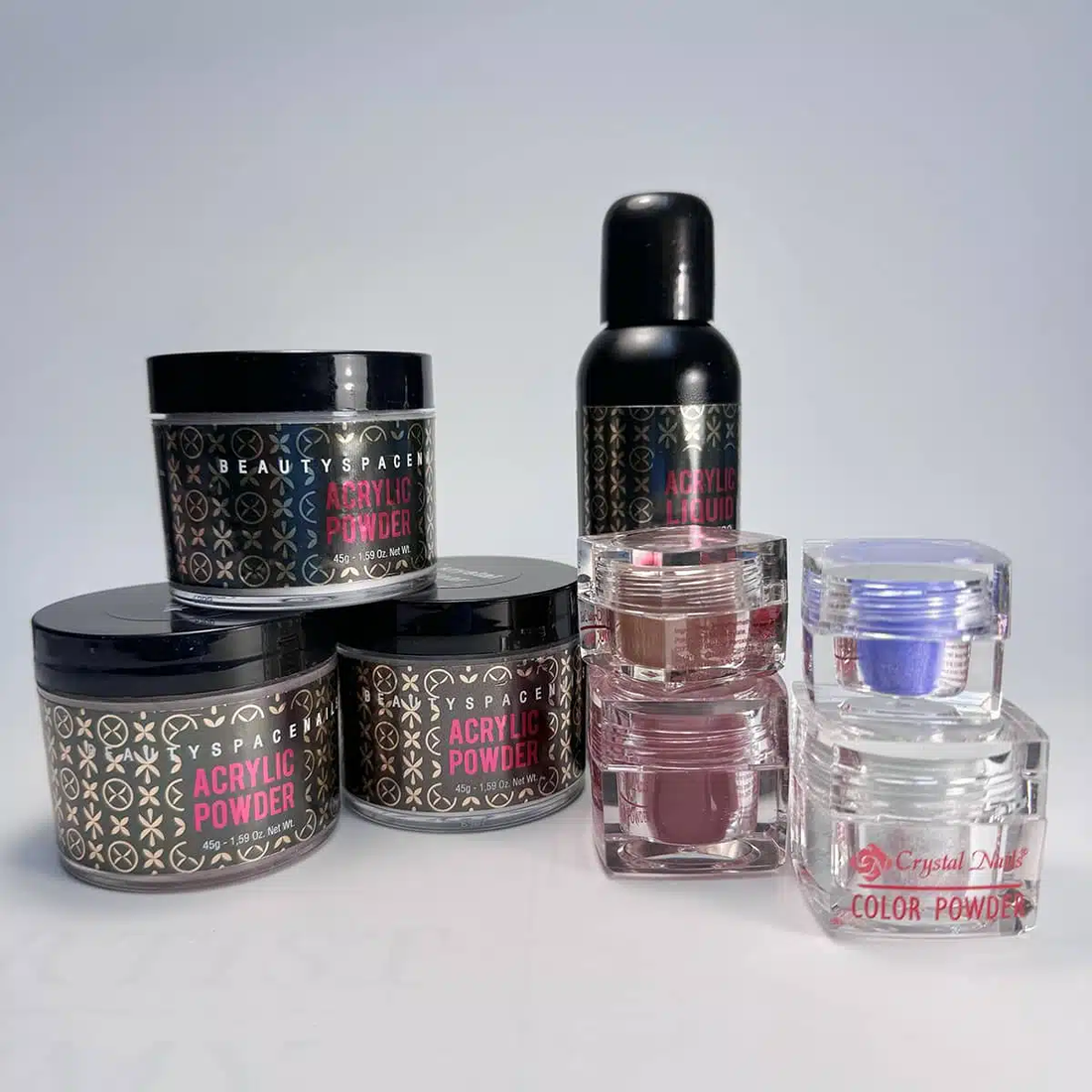
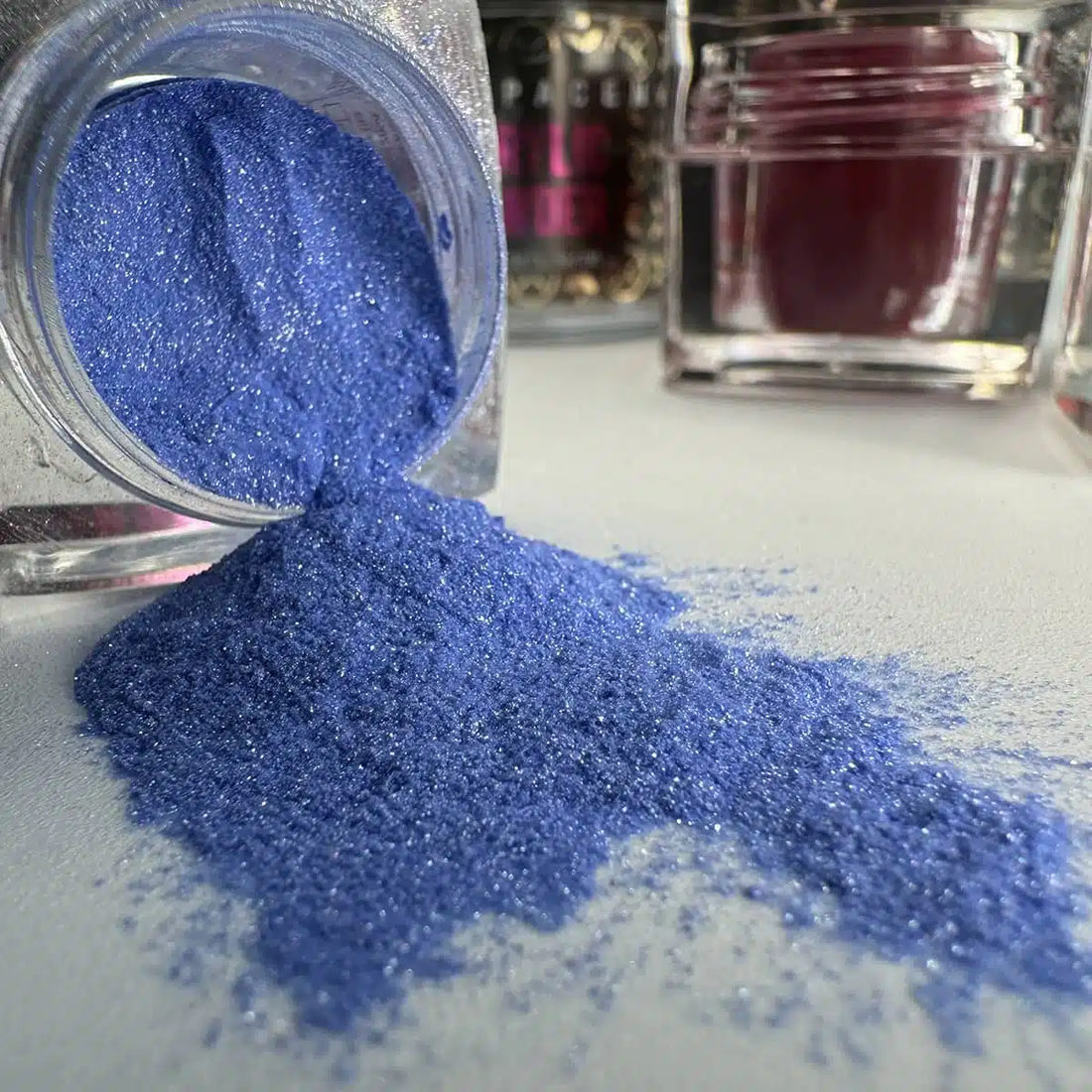
The acrylic system consists of two products mixed together: monomer, a strong-smelling liquid, and powder. Dip the brush in monomer, then pick up powder from the pot to form a bead, which you apply to the nail.
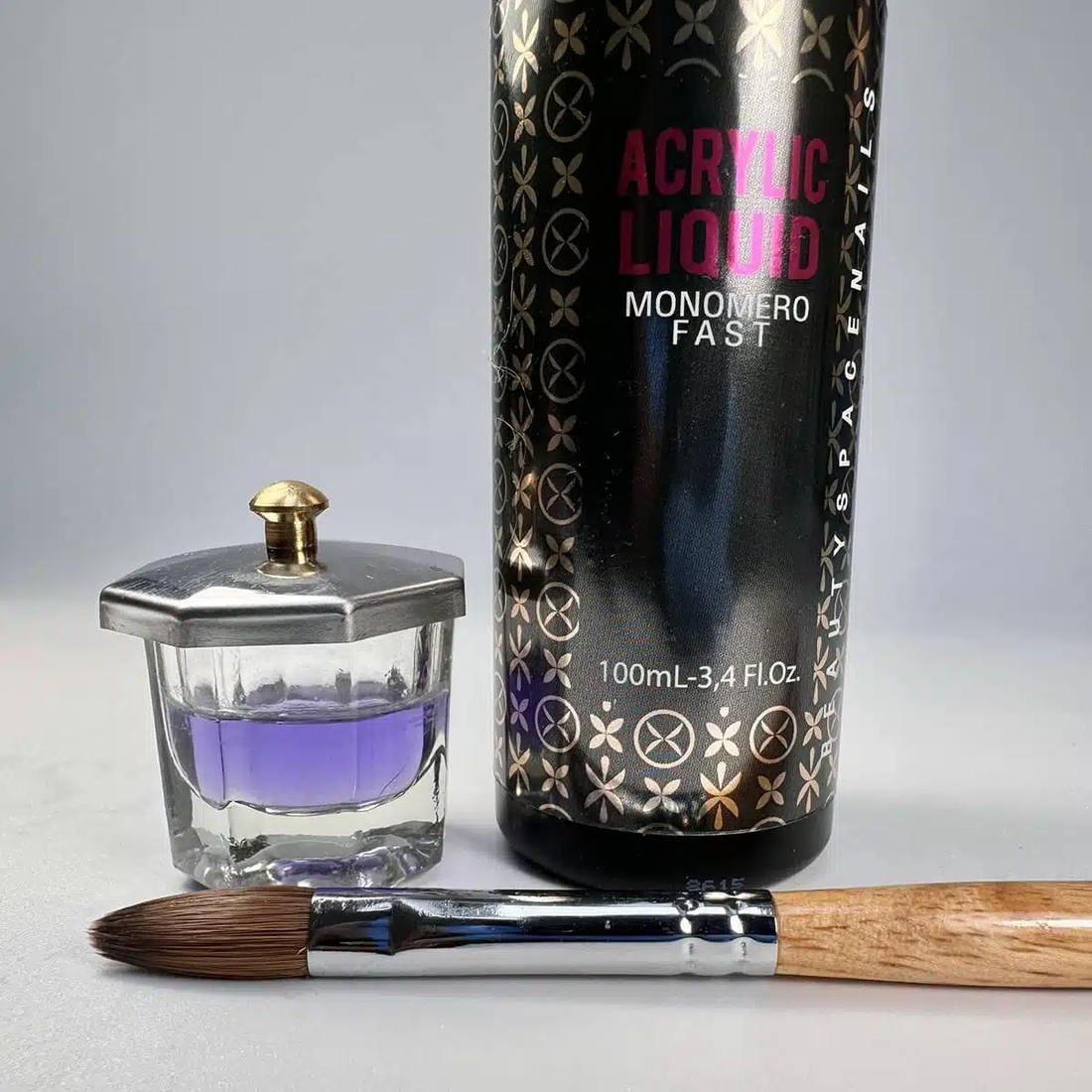
Here are its properties:
- Colour: the same options as gel;
- Heat: acrylic produces very mild heat as it cures;
- Curing: it air-cures, so no lamp is needed. Higher temperatures speed up curing, and timings vary between formulations;
- Smell: unless you use an odourless formulation, monomer has a strong, pungent smell. You either love it or hate it, but the smell alone does not mean it is toxic;
- Consistency: you can adjust the liquid-to-powder ratio, but the bead thickens quickly because it cures as you work. Work on one nail at a time;
- Flexibility: extremely rigid. Once fully cured, it feels like stone;
- Pinching: it is the most pinchable material;
- It could be considered a single-phase system, because it needs no base coat and can be buffed to a shine with a special file. However, using a top coat is faster.
Some of these properties cannot be changed. Even with slower-setting formulas, you must work quickly and precisely to create nails that look good and have a sound structure.
Application uses dedicated Kolinsky sable brushes, with pressing and smoothing movements that follow a completely different technique from gel.
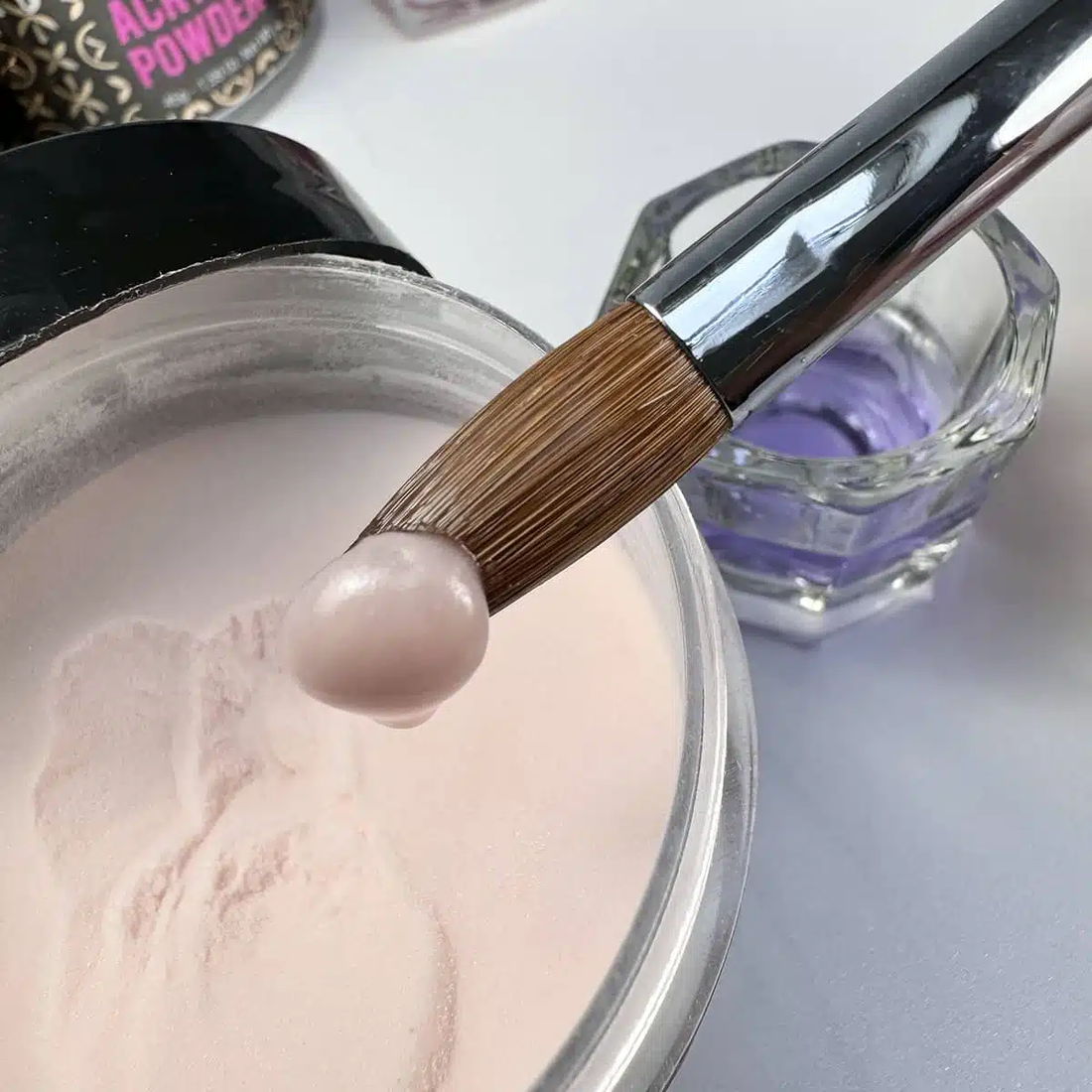
Filing takes effort because cured acrylic is extremely hard: the file produces flakes and larger fragments rather than fine dust.
With good application technique, you can build a precise shape and minimise filing.
While gel and acrygel are removed using an e-file and/or hand file, acrylic can be dissolved with acetone or a dedicated remover.
It is certainly the product of choice for clients who bite their nails.
Acrygel: properties and uses
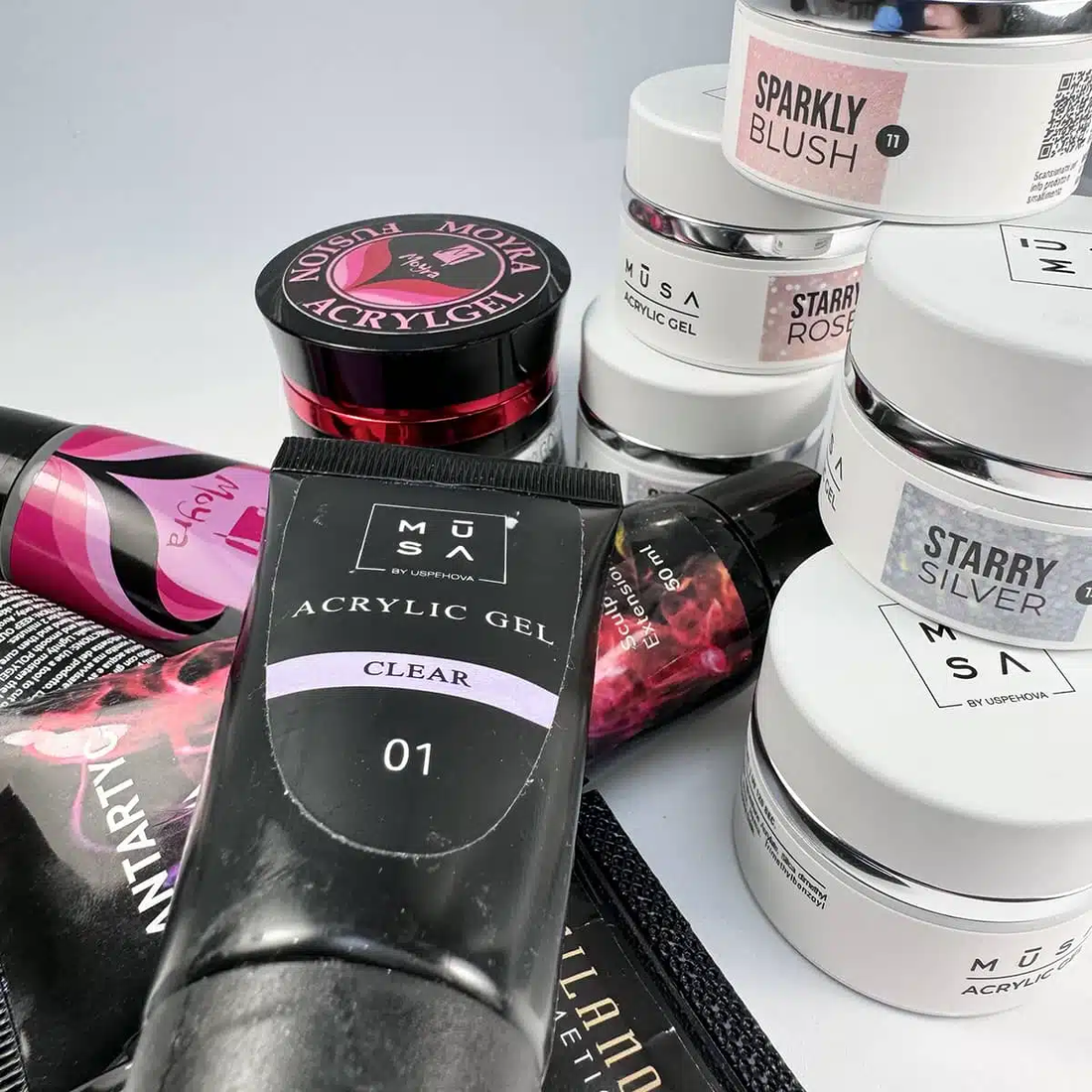
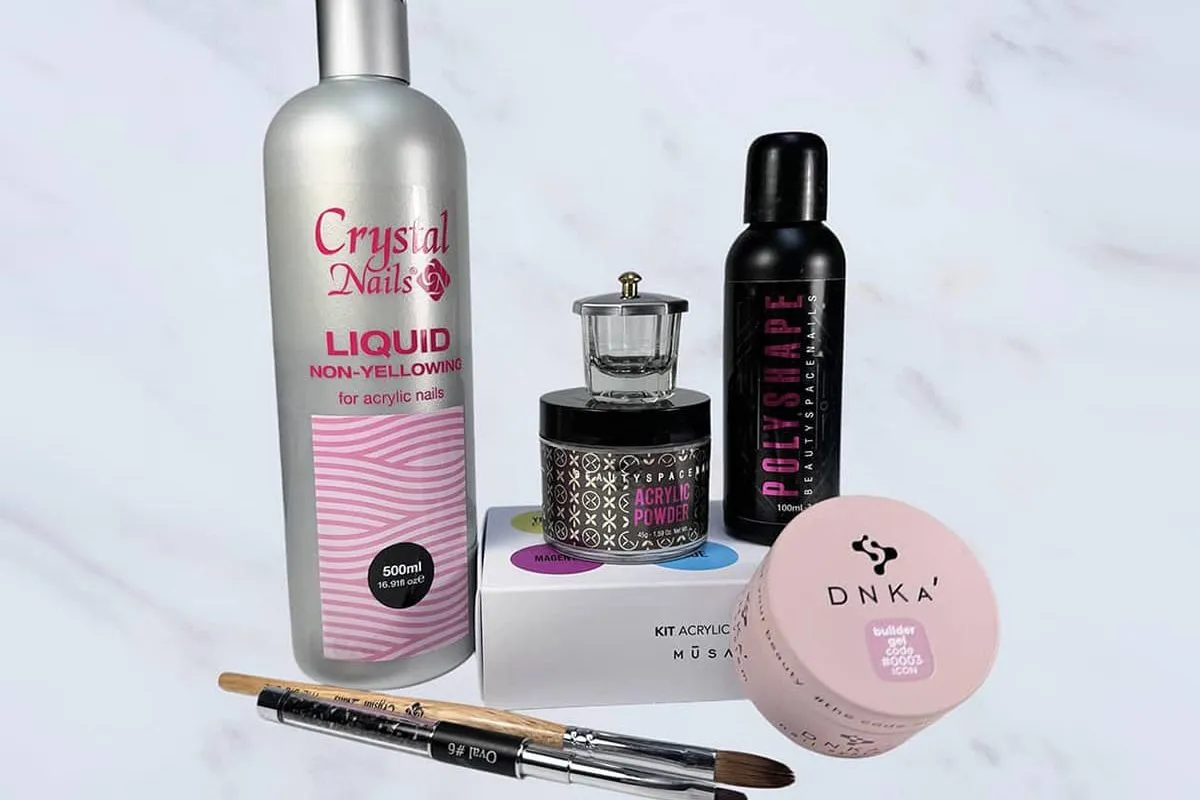
This system consists of two products: acrygel and its working solution (or cleanser).
As with acrylic, you dip the brush in the solution and use it to shape a bead of acrygel on the nail.
It was initially presented as a product just like acrylic, but in gel form and cured under a lamp. A dream come true!
In practice, the details are a little different:
- Colour: the same options as the other products;
- Heat: it usually produces little heat;
- Curing: under a UV/LED lamp, like gel;
- Smell: very mild;
- Consistency: very thick. You can usually work on several nails at once, provided you do not use too much solution and the room is not too hot. Acrygel can run too!
- Flexibility: generally rigid, although less so than acrylic;
- Pinching: it is often sold as pinchable, but I have found some products do not hold the pinched shape well;
- It is a three-phase system, requiring a dedicated base and a separate top coat.
Read this article if you want to learn more about the difference between single-phase and three-phase systems.
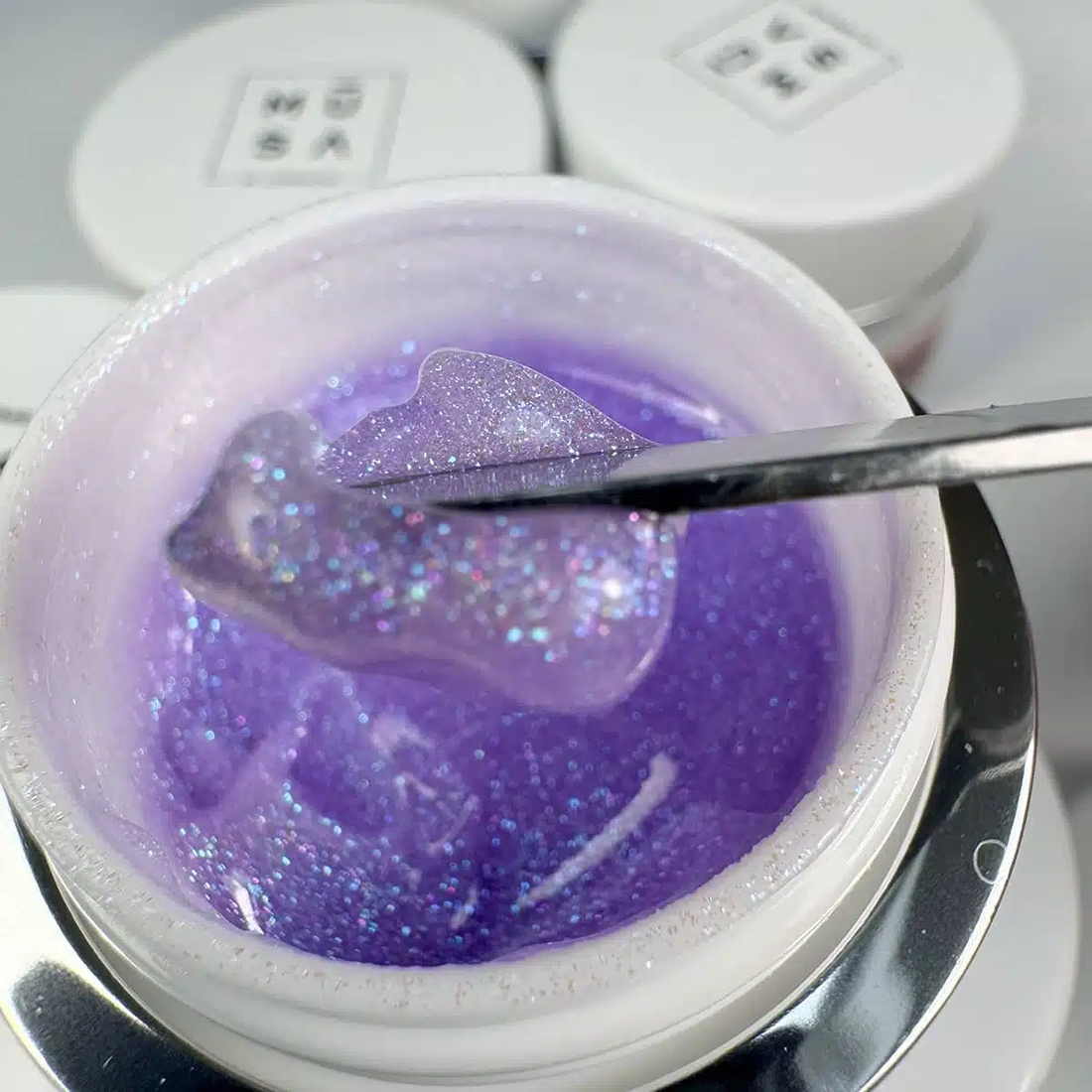
When I read about the benefits of acrygel, I often see claims that, unlike gel, it lets you work on several nails at once. Perhaps those making this claim do not know these products well.
Acrygel is very thick, but it can still run when the room is hot, such as in summer, or when you use too much working solution on the brush.
Some jelly-like gels without thixotropic properties do not do this.
Certain gels let you work on as many as 5 nails at once, even in extreme conditions. I would not recommend that with acrygel.
Using too much solution can create an unstable structure and leave some softened product under the cuticle area. If you can tidy this with an e-file before applying colour, it need not be a major problem. Otherwise, the client may return with ridges and lifting around the cuticle.
The application technique is just like acrylic, which is why I usually prefer a Kolinsky sable acrylic brush. Convenient dual-ended brushes are also available, with a spatula for picking up product at one end and synthetic gel-style bristles at the other.
My experience with the latter is that the bristles soon become damaged and splay out, making the brush unusable.
Sable bristles, on the other hand, work very well and keep their shape.
Acrygel can work well on bitten nails, just like a very rigid gel, but it will never match acrylic.
An acrygel course can nevertheless be a good introduction for anyone planning to study acrylic, because the application techniques are almost identical.
Final remarks
Is one product better than the others?
Can we save money by keeping just one of these materials in our drawers?
For me, the answer is no. Of course, when starting out, we specialise in one material first and gradually expand our knowledge.
As we have seen, there is no universally best product: materials should be chosen to suit the service and the client.
I cannot use the same product on a nail-biting client who works on a farm as I would on an office worker.
If I sculpt a 15 cm stiletto, I am unlikely to use the same material as for an overlay on a natural nail with a 4 mm extension.
I also need to consider my own requirements: do I have the skill to work with very fluid products?
Do I prefer coloured builder gels, or a cover base that lets me choose a different colour each time?
Which material speeds up my work, and which slows me down?
Many factors depend on our preferences and our clients’ preferences, as well as the demands of each service.
Nail technicians encounter many different situations. It is virtually impossible to handle all of them properly with a single material.
The broader our skills and training, the more our work benefits. We become well-rounded professionals in our clients’ eyes, able to meet requests that we might otherwise have to decline.