
Have you ever had a client whose nail enhancements looked perfect on day one, only for the gel to lift a week later for no apparent reason? Same technique, same products, same lamp—yet on those hands, it just will not stay on.
Working on nail enhancements on sweaty hands can be one of the most frustrating parts of our job. It is frustrating for the client wondering why their enhancements never last, and for a beginner nail technician who starts questioning everything: the gel, the lamp and their own skills.
This article aims to make things clearer. We will look at why sweat affects adhesion, how to prepare the nail plate, which products can help and which mistakes to avoid. One important clarification: if you experience excessive sweating, often called hyperhidrosis, this article provides technical guidance on nail enhancements. For the sweating itself, your doctor is the appropriate person to consult.
Why sweat causes gel (and gel polish) to lift
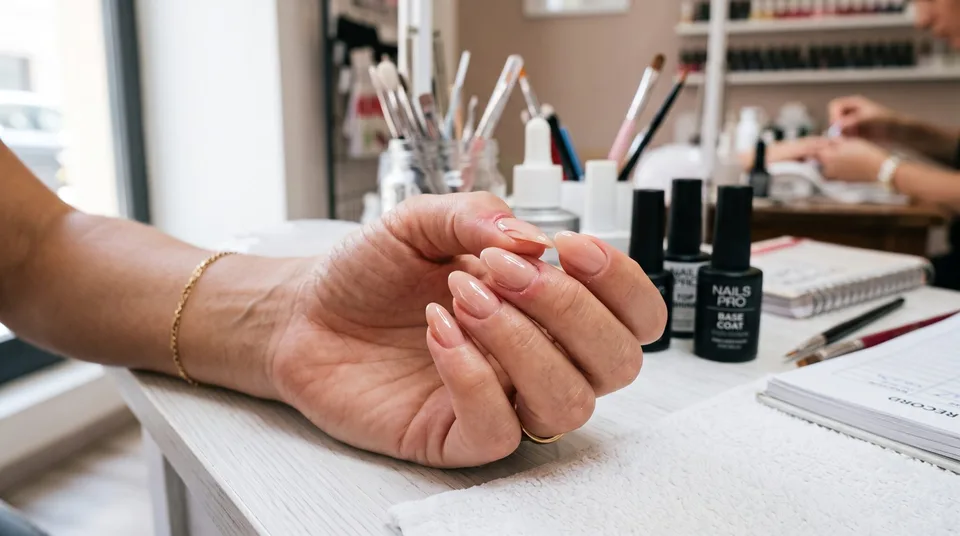
Let’s start with the basics. Gel and gel polish need a dry, thoroughly degreased nail plate to adhere. This is the minimum requirement for the product to grip the surface and stay in place for weeks.
Sweat undermines precisely that condition. It brings moisture and salts to the nail plate, forming a very thin layer between the nail and the product, so adhesion is compromised from the start. You may have degreased thoroughly, but even thirty seconds between cleansing and applying the base can be enough for a sweaty nail plate to change again.
The problem is not limited to application. In someone whose hands sweat heavily, the nail plate tends to be more flexible and softer because it continually absorbs water and changes shape slightly throughout the day. Cured gel is rigid. When two layers move differently, separation occurs.
The first areas to lift are almost always the cuticle area and the side edges: the nail plate is thinner there, the skin is closer and moisture reaches these areas first. The mechanism is the same as in my article on lifting in nail enhancements, but here the trigger is a characteristic of the client’s hands rather than a technical error.
The point is simple: the gel is not “defective”. The surface we apply it to needs a different approach.
Nail enhancements and gel polish: the same problem to different degrees
Traditional gel polish is thin and designed to last two or three weeks under normal conditions. On sweaty hands, it tends to lift first: edges may start lifting after just a few days. It does not have enough structure to resist movement of the nail plate, and once moisture gets underneath, separation spreads quickly.
A gel enhancement has more structure and more layers contributing to adhesion than gel polish. It holds better, but it is not immune: lifting can still occur, just more slowly. If a client says gel polish lasts four days but gel enhancements last two weeks, that is not a coincidence—it is the behaviour we would expect on hands that sweat heavily.
Recognising excessive hand sweating before you begin
Now for the practical part, especially for those working at the nail desk. If you are a client, this section will help explain why a good nail technician asks certain questions before even picking up a file.
There are more observable signs than you might think:
- Hands that feel cold and damp when you first greet the client.
- A nail plate that becomes shiny again shortly after degreasing, as though no cleanser or dehydrator had been applied.
- A history of repeated lifting with different nail technicians and products.
- A client who says their manicure always needs redoing sooner than everyone else’s.
- Cuticle tissue that remains soft and tends to cling to the nail plate again after being pushed back.
The key is to ask the right questions during the initial consultation. “Does your gel often lift? After how many days? Where on the nail does it happen?” Three questions take a minute and let you adapt your work from the outset, instead of facing ten lifted nails at the infill appointment.
This is not the client’s fault—they did not choose to have hands like this—and it does not mean the nail technician is at fault for following their usual procedure. It is a situation to recognise. Once you do, it stops being a mystery and becomes a familiar routine with a few extra steps.

Nail preparation: the key to success
First, an important point: gel lifting on sweaty hands is usually a matter of preparation, not the product. I say this before discussing primers and bases because I do not want anyone rushing to buy new products straight away. Preparation comes first: that is where lasting adhesion begins.
Let’s look at the steps one by one.
1. Hand hygiene and cleansing. As with any treatment, wash and disinfect hands and nails before starting. With sweaty hands, removing existing sweat before touching the nail plate is particularly important. To revisit the hygiene, disinfection and sterilisation protocol, see my dedicated article.
2. Carefully push back and remove cuticle tissue. Any residue left on the nail plate creates an entry point for moisture. On other hands it might go unnoticed for a few days; on sweaty hands it can quickly lead to lifting. Take the time you need.
3. Remove shine without thinning the nail plate. Use a fine-grit file gently: the aim is to remove the natural shine, not thickness. We will return to the temptation to “file a little more” in the common mistakes section.
4. Dehydrate twice, not once. Apply dehydrator carefully, let it dry for a few seconds, then repeat. On sweaty hands, moisture returns quickly, so the second application deals with what has resurfaced in the meantime. A third application may also be needed.
5. Work on one nail at a time when necessary. Dehydrate, apply primer and base, then cure. Move on to the next nail. Preparing all ten before applying the base gives moisture time to return to the first nail while you work on the last. If one nail at a time feels too slow, work on one hand at a time at least.
6. Do not touch the nail plate after degreasing. The technician’s fingers sweat too. An accidental touch on a freshly cleansed nail plate takes you back to square one. You should always wear gloves while working anyway!
Another practical tip: have the client rest their hands on a dry paper towel and replace it as soon as it becomes damp. If possible, keep the room cool and the dust extractor running beneath the client’s hands. These small details can make the difference between enhancements lasting ten days and twenty.
As you become familiar with these hands, preparation becomes almost automatic. Many of these measures can also improve retention for other clients.
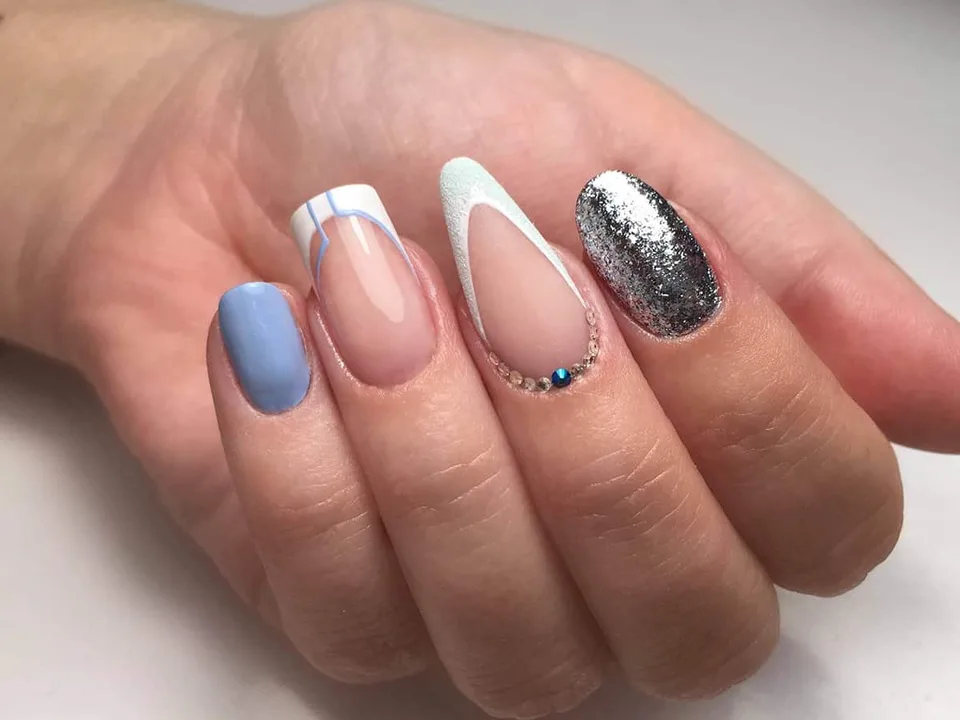
Nail preparation is the foundation of everything
My Gel Base Plus course is the starting point for any aspiring nail technician.
15 hours and 20 lessons provide the foundations you need for impeccable work!
Primer, base and products: what really changes
Now let’s discuss products, with one clear proviso: no product can compensate for poor preparation. However, some choices can help, and they are worth understanding.
Primer for sweaty hands: acid or acid-free?
There are two main types: acid primer and acid-free primer. Put simply, the first creates a more aggressive microscopic grip on the nail plate, slightly altering its surface to improve adhesion. The second works like gentler double-sided tape: it does not alter the nail plate, but creates an intermediate layer that bonds with both the nail and the base.
For hands that sweat heavily, acid primer often gives the best retention. Use a minimal amount: a thin film, not a drop. Apply only to the natural nail plate, never the skin, and let it dry completely before applying the base. As I always tell my students, it is not the answer for every client. Nails already weakened or thinned by previous treatments need individual assessment; sometimes acid primer is precisely what they do not need.
Acid-free primer is a reasonable compromise if the client cannot tolerate acid primer or the retention problem is moderate. A gentle primer applied well is better than an aggressive one applied poorly.
In more complex cases, both may be applied.
The base coat
This may seem counterintuitive. You might expect a moving nail plate to need a rigid base. In fact, a slightly more flexible rubber base or builder base follows the nail plate’s small movements better than a very rigid base.
Imagine two bonded layers: if one bends and the other does not, they will eventually separate. If both bend slightly, they stay together longer. Where rigid gel breaks away, a more flexible product moves with the nail. In this particular situation, flexibility is an advantage.
The builder product
A brief note, without going into detail here: in some cases, acrygel or acrylic behave differently from traditional gel on sweaty hands because of their adhesion and curing characteristics. They are not automatically better, but they are options worth knowing. To understand how they differ, read the guide to the differences between gel, acrygel and acrylic.
One last point about your system: whether you use single-phase or three-phase gel, remember that a three-phase system with a dedicated base adds an adhesion step. On sweaty hands, that extra step can help.
As I always say, there is no single best product—there is the right product for that nail plate.
Advice for clients: how to make nail enhancements last longer
This section is for you if you wear gel and your hands sweat. You cannot change your skin, but you can help your nail technician’s work last longer.
- Avoid keeping your hands clenched or tightly gripping objects for long periods immediately after treatment—for example, inside gloves or around bag handles or a steering wheel. Heat and moisture building up in the palms reach the area around the nails.
- Dry your hands thoroughly after washing, paying particular attention to the nail contours and side edges.
- Do not “test” the gel’s edge with another nail. It may be an automatic habit, but where air gets in, moisture follows. A tiny lifted edge can become substantial lifting within days.
- Tell your nail technician as soon as lifting starts instead of waiting for your infill. A small repair in time can avoid having to redo everything.
- Consider more frequent infills, every two or three weeks rather than four, especially in summer, when almost 99% of clients experience some lifting problems.
One important note: if you notice a change in colour or smell, or discomfort beneath a lifted area, do not try to diagnose it yourself or wait. Ask your nail technician to remove the product and a doctor to assess it. I also discuss this in Do nail enhancements damage your nails?. Properly performed enhancements should not cause problems; if something seems wrong, have it checked.
Common errors
Here are the mistakes I most often see when working on sweaty hands. Some concern technique; one concerns attitude.
1. Over-filing the nail plate to “make it stick better”. This is both common and damaging. Thinning the nail weakens it, increases flexibility and makes lifting worse. Instead, gently remove shine with a fine buffer without thinning the plate.
2. Using too much acid primer. More product does not mean better retention. It only increases the risk of irritation to the surrounding skin. Apply a thin film to the nail plate only and let it dry completely.
3. Degreasing all ten nails before starting. The time between degreasing and base application is the main enemy here. Work on one nail at a time, or at most one hand at a time.
4. Applying product too close to the cuticle. That millimetre of clearance always matters, but it is especially important on sweaty hands, where moisture enters first. Keep a clean margin around the cuticle and cap the free edge properly.
5. Changing gel brands every time lifting occurs. I understand the temptation, but the problem is often the method rather than the product. Changing gel without changing preparation means spending money for the same result. Review preparation first, then consider changing materials.
6. Blaming the client. “You have strange hands” is something we should never say at our nail desk. Establish an honest dialogue from the first appointment.
There is no magic wand, but there is a method—and it can be learned. Assess the nail plate, adapt preparation and choose the right product for those hands, rather than an imaginary pair that never sweats.
As I always say, clients should not have to adapt to our way of working. We need to understand the hands in front of us.
If sweaty hands still present a challenge, do not see it as a failure. It is another skill to build, another part of the craft. With the right practice, those skills will come.
Start your training at my academy
The most comprehensive online course platform in the nail world.
You will find courses in both nail sculpting and nail art.
Once you have purchased a course, it will be available on your profile forever.
FAQ
Why does gel not adhere well on sweaty hands?
Moisture returning to the nail plate compromises adhesion from the first layers. The gel is not defective: preparation and product choice need to be adapted, with more thorough nail preparation and a suitable primer.
Does primer always solve the problem of sweating?
No. Primer helps, sometimes significantly, but it is not enough on its own. Without proper nail preparation, even the best primer cannot work miracles. Get the method right first, then choose the product.
How often should you do infills for a client with sweaty hands?
More often than usual. While infills on other hands may be scheduled every 3–4 weeks, here it can make sense to shorten the interval to 2–3 weeks. Agree this with the client from the outset, with a price that reflects the additional work.
Are very sweaty hands a medical problem?
Excessive sweating can have many causes, and assessing them is not the nail technician’s role. If it causes the client discomfort outside the salon too, suggest speaking to their doctor. We can adapt our technique, but we cannot treat the underlying cause.